

Text。Photography:Dickson Wong(Head of Biology, Ho Koon Nature Education cum Astronomical Centre)
For those who enjoy walking along more secluded paths, have you ever had the experience of ‘running into’ spider webs? While hiking, many may fail to notice the nearly transparent webs right in front of them, colliding with these intricate traps. Do these unpleasant encounters lead to a dislike for spiders? Is the only spider you know the large, yellow-black-bodied and well-known Golden Orb-web Weaver, which resides in its giant round web? In fact, spiders are everywhere in Hong Kong’s countryside. Now, I would like to share some representatives from different corners, hoping to provide you with more understanding, reduce misconceptions, and therefore appreciate and marvel at the biodiversity of Hong Kong.
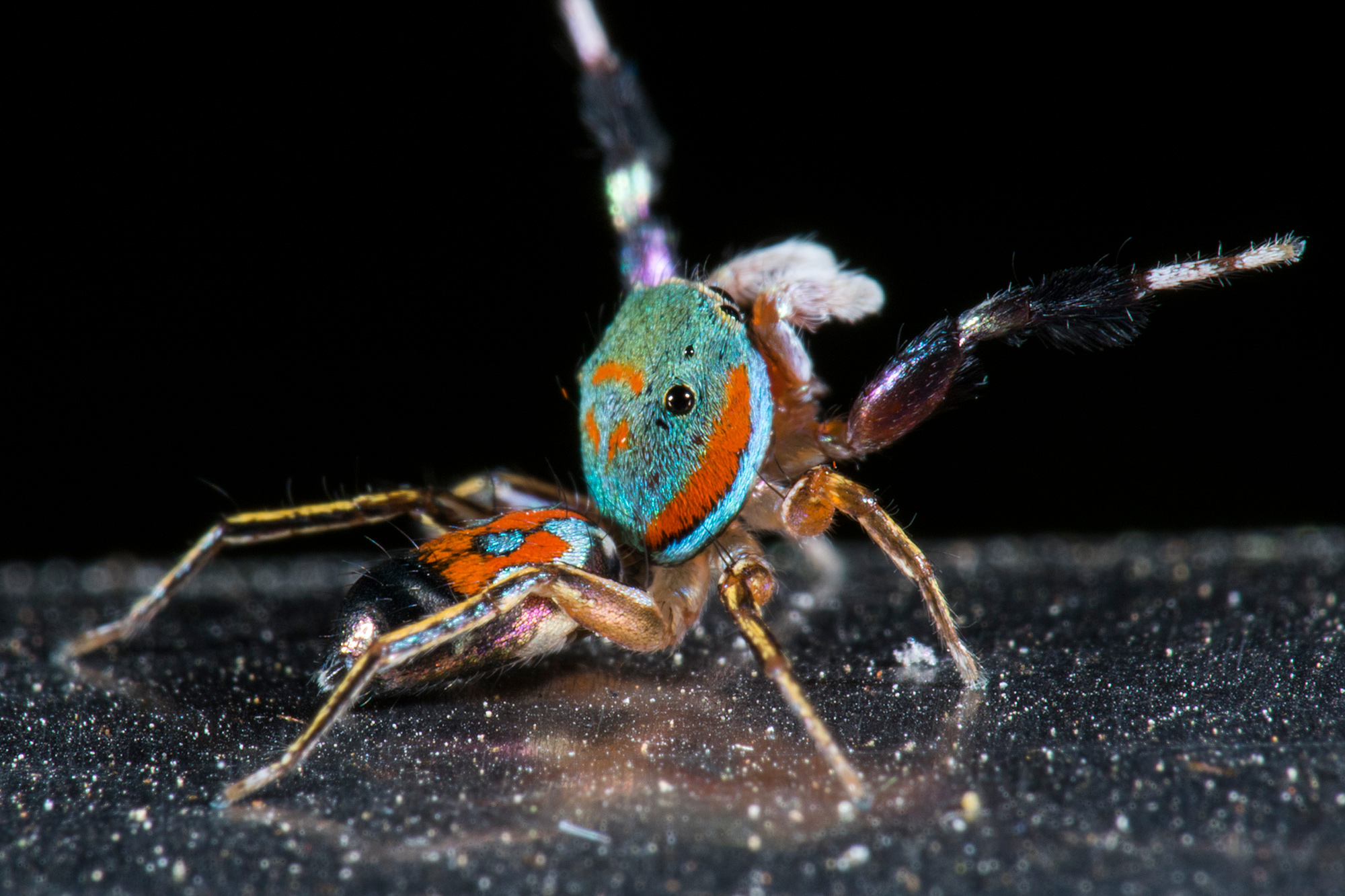
Hong Kong’s countryside features a variety of railings, which, despite being made of non-natural materials and even smooth, cold metal, can attract numerous insects and small animals. This, in turn, brings their predators—spiders. During the day, the most commonly seen spiders on the railings are from the jumping spider family, with over a hundred recorded species in Hong Kong. This includes the vibrant and elegantly dancing Siler collingwoodi, as well as the ‘golden silk spider’ and ‘leopard spider’ that many might remember from childhood, along with ant-like ant spiders, all part of the jumping spider family. Jumping spiders possess a pair of large anterior median eyes, resembling big headlights, making them frequent models for macro photographers.
Another type that loves to hide among flowers is the crab spider, which surprisingly often seen along railings. Their first and second pairs of legs are quite long and often extend sideways, making them appear crab-like from a distance. Crab spiders have a hunting strategy of lying in wait, ambushing insects that come to feed on the nectar in flowers. Another species, the ant-like crab spider, has a body and color similar to weaver ants, often weaving between ant trails with the intent of preying on them. After catching their prey, they frequently suspend silk in the air, which effectively prevents the ants from struggling and also avoids attracting the attention of their companions.
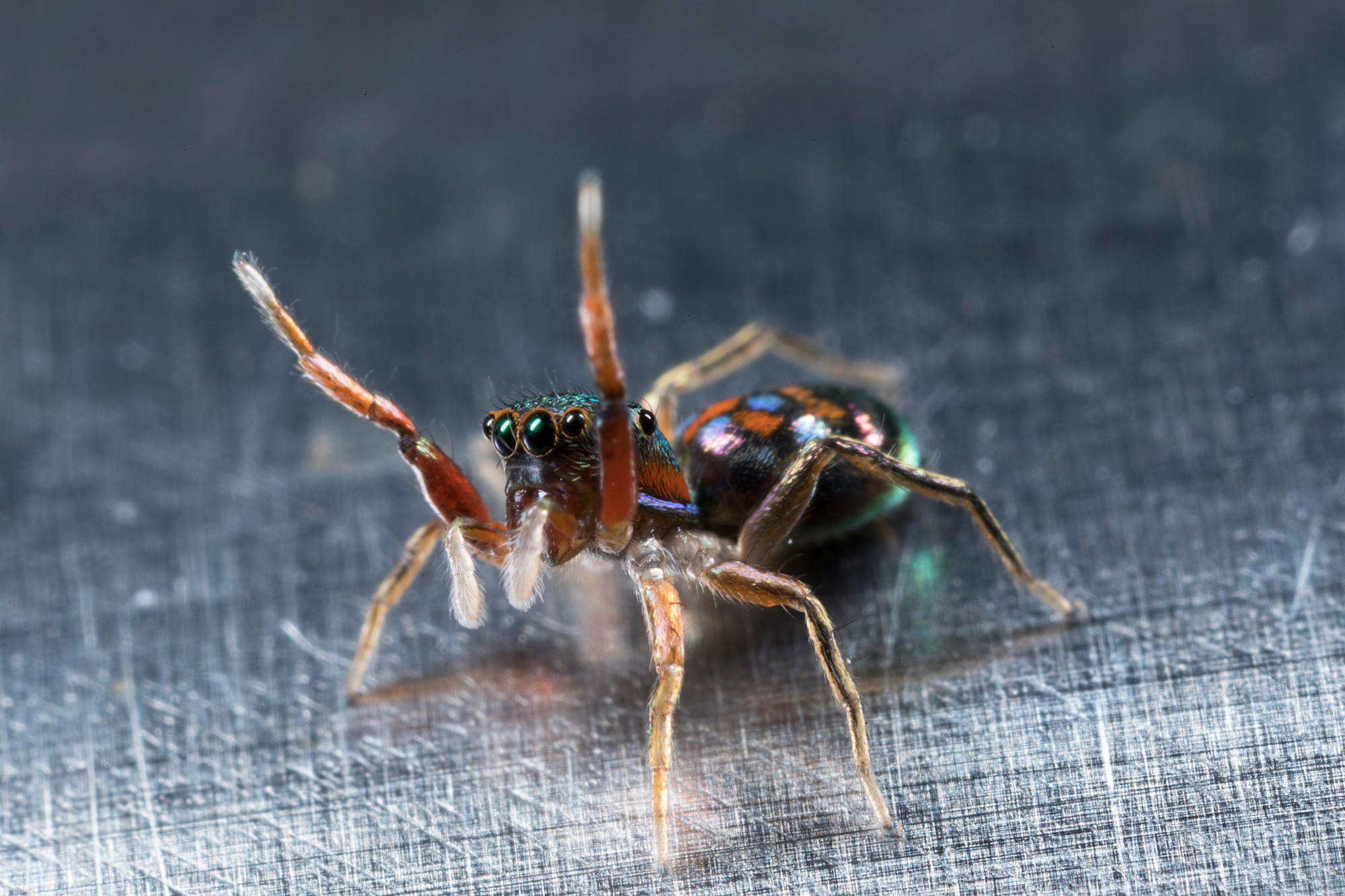 Jumping spiders have a very cute and attractive appearance. The Siler collingwood pictured is only a few millimeters long, and it takes a macro lens to capture its most vibrant side.
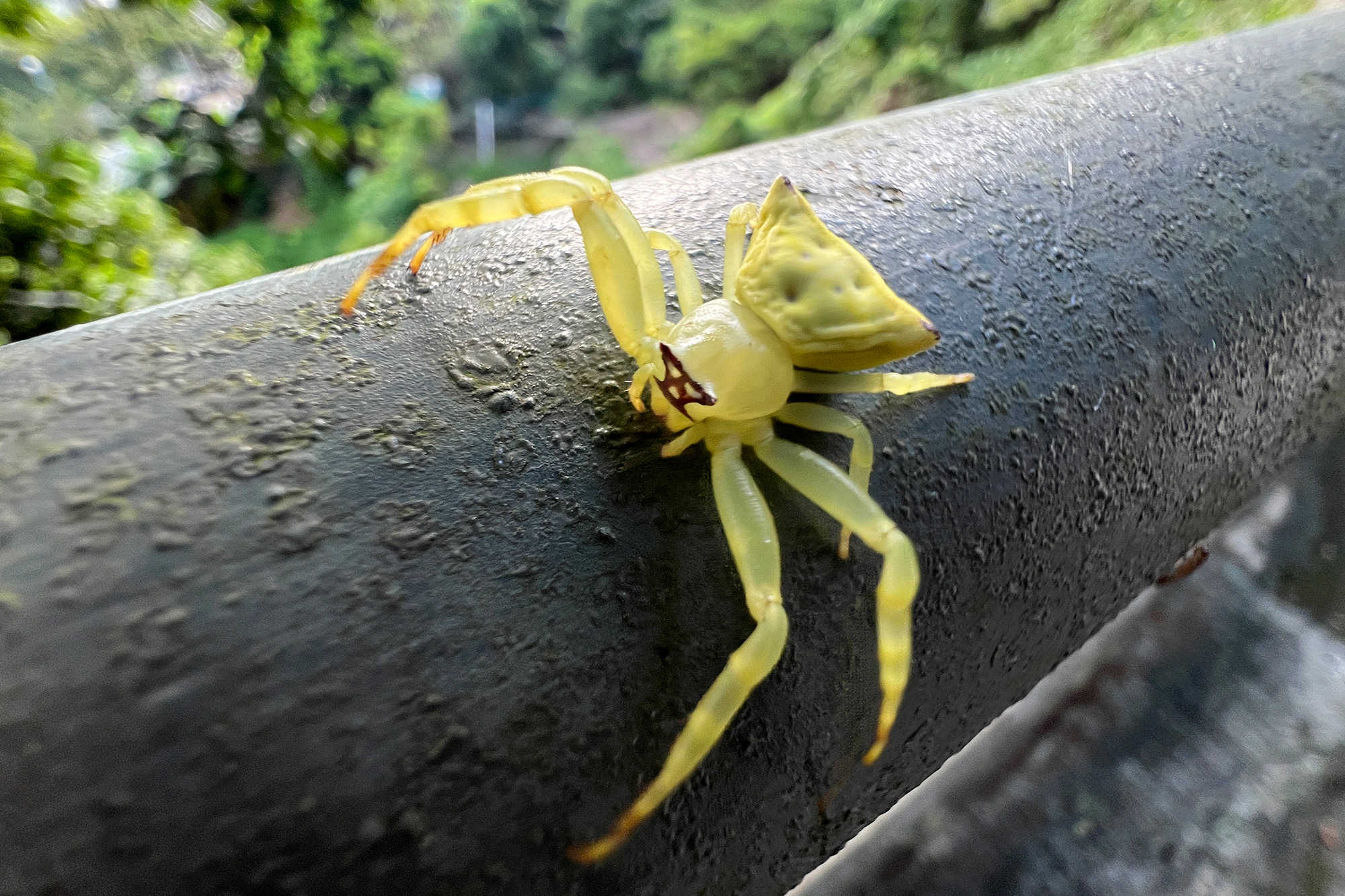 Crab spiders love to hide among flowers, ambushing insects that visit the blossoms.
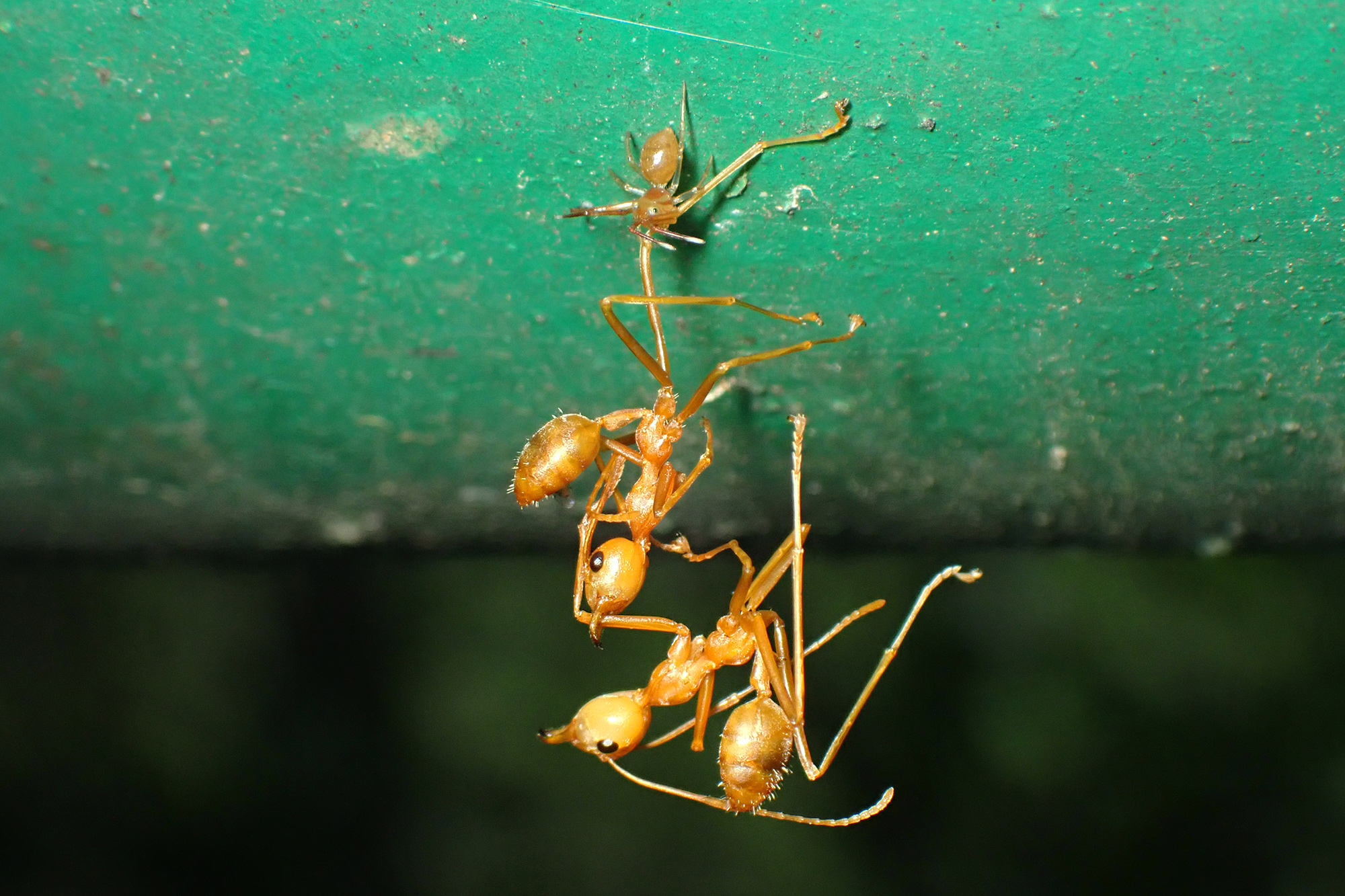 Ant-like crab spiders are smaller than weaver ants, yet they can surprisingly pull two adult ants!
If you are walking at night using a headlamp, you might often see reflective points on the ground or in piles of dry leaves. These could be reflections from water droplets, but it’s more likely that they are reflections from spider eyes. If you observe a brown spider or one with black spots and long black bristle-like hairs on its legs, it likely belongs to the wolf spider family. They are mostly nocturnal, relying on their long hairs for touch, allowing them to effectively capture insects like grasshoppers and crickets in the dark.
Additionally, when you walk into habitats with bushes or grassy areas, whether during the day or at night, keep an eye out for spiders on the tops or undersides of leaves. If they have longer and more numerous black bristles on their legs, they belong to the lynx spider family. Lynx spiders are quick moving; they can both run and jump, and possess a keen sense of touch, making their hunting ability unaffected by light levels.
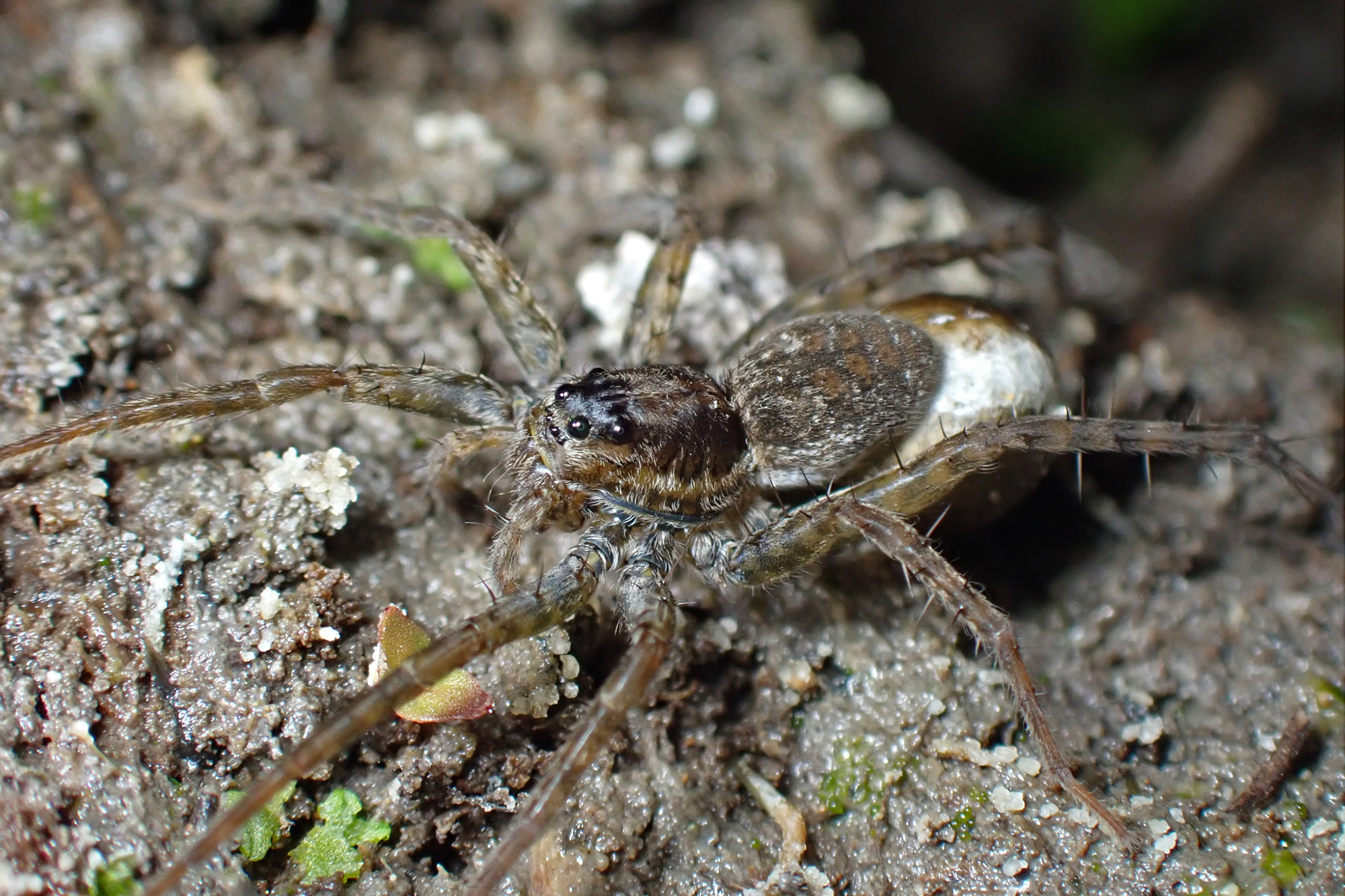 Wolf spiders have coloration that provides excellent camouflage, and their reflective eyes are usually only noticeable when illuminated by a headlamp at night.
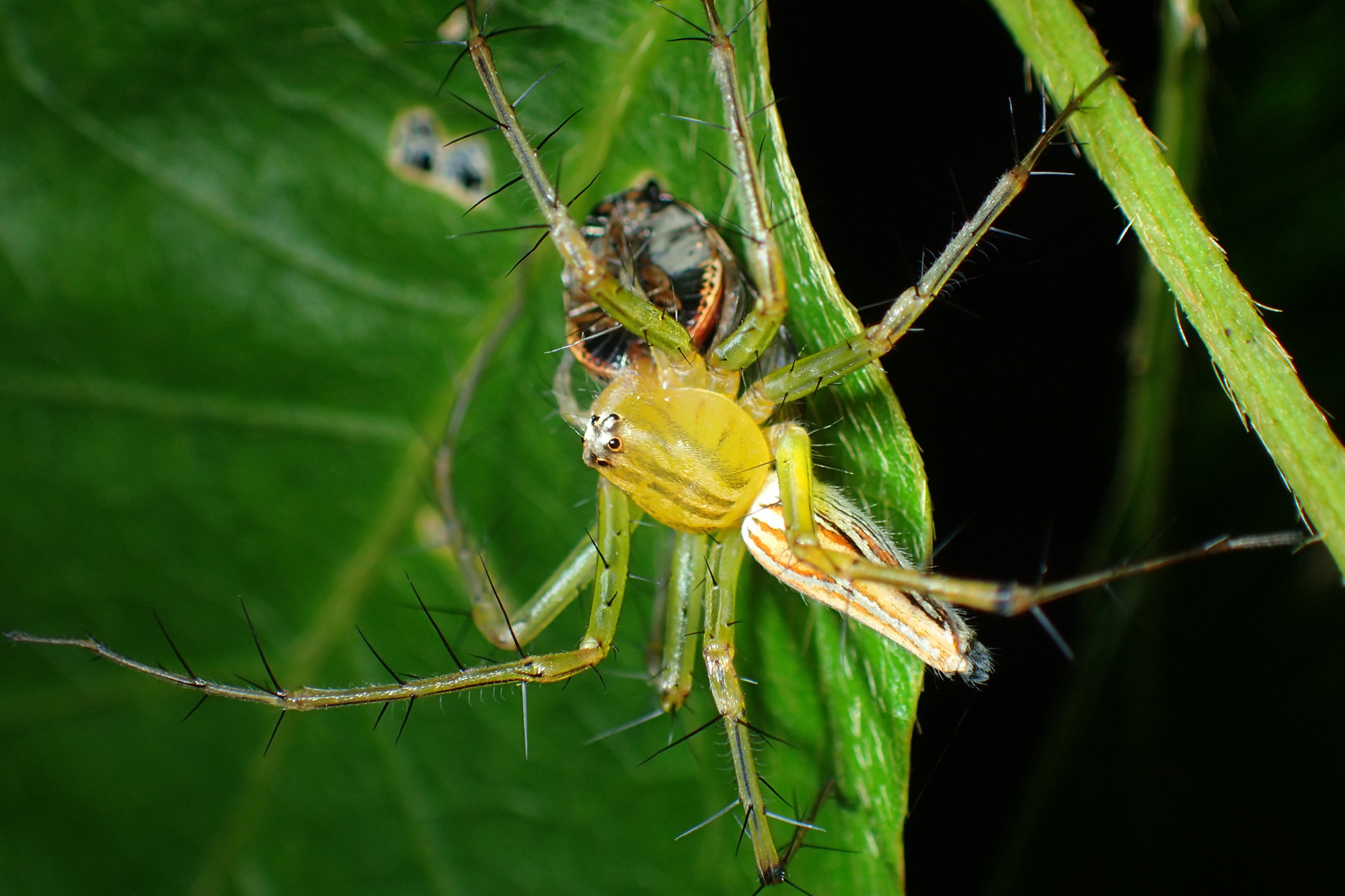 Lynx spiders have developed sensory hairs on their legs that enable them to effectively capture prey in both light and dark environments.
For those who enjoy walking along streams or activities by the creek, you must have seen spider webs constructed horizontally or diagonally between rocks, which are distinctly different from the vertical orb webs found in forests. The spiders that spin webs on the water’s surface primarily belong to the family Tetragnathidae, also known as big-jawed spiders. As their name suggests, they have three pairs of long legs and an elongated body. Thus, when resting, some of them attach to branches with their shortest pair of legs clinging to the branch while the other legs extend upwards and downwards, blending seamlessly into their surroundings. When preparing to hunt, they stay in the center of their web with their abdomen facing up and their eyes looking toward the water’s surface. When aquatic insects like mayflies and stoneflies emerge from the water and take flight, they often collide with the flat web suspended above the water, thus becoming the prey of the Tetragnathidae.
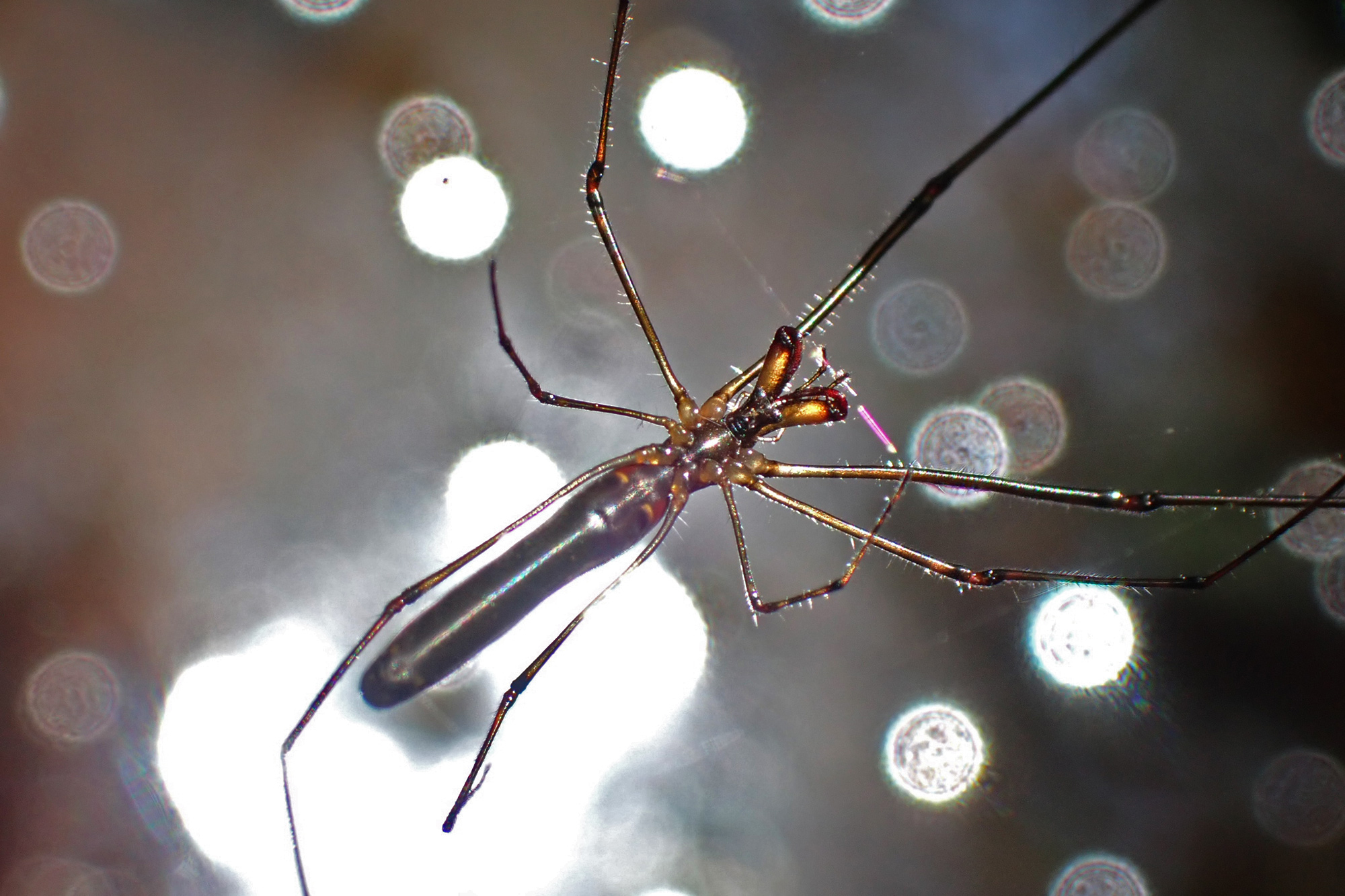 Tetragnathidae is called the big-jawed spider in English. In the photo, you can clearly see its huge fangs.
Additionally, along the water’s edge, on the water’s surface, and even underwater, there exists a type of spider that specifically inhabits aquatic environments. Similar to wolf spiders, they do not build webs to hunt; instead, they actively seek out prey. This fishing spider belongs to the family Pisauridae. They possess special skills to dive into the water, waiting for small fish or shrimp to pass by, then using their venomous fangs to kill their prey. Alternatively, they may place their first and second pairs of legs in the water to detect insects that have fallen in, and with remarkable agility, they can swiftly glide across the water surface to reach and capture prey larger than themselves.
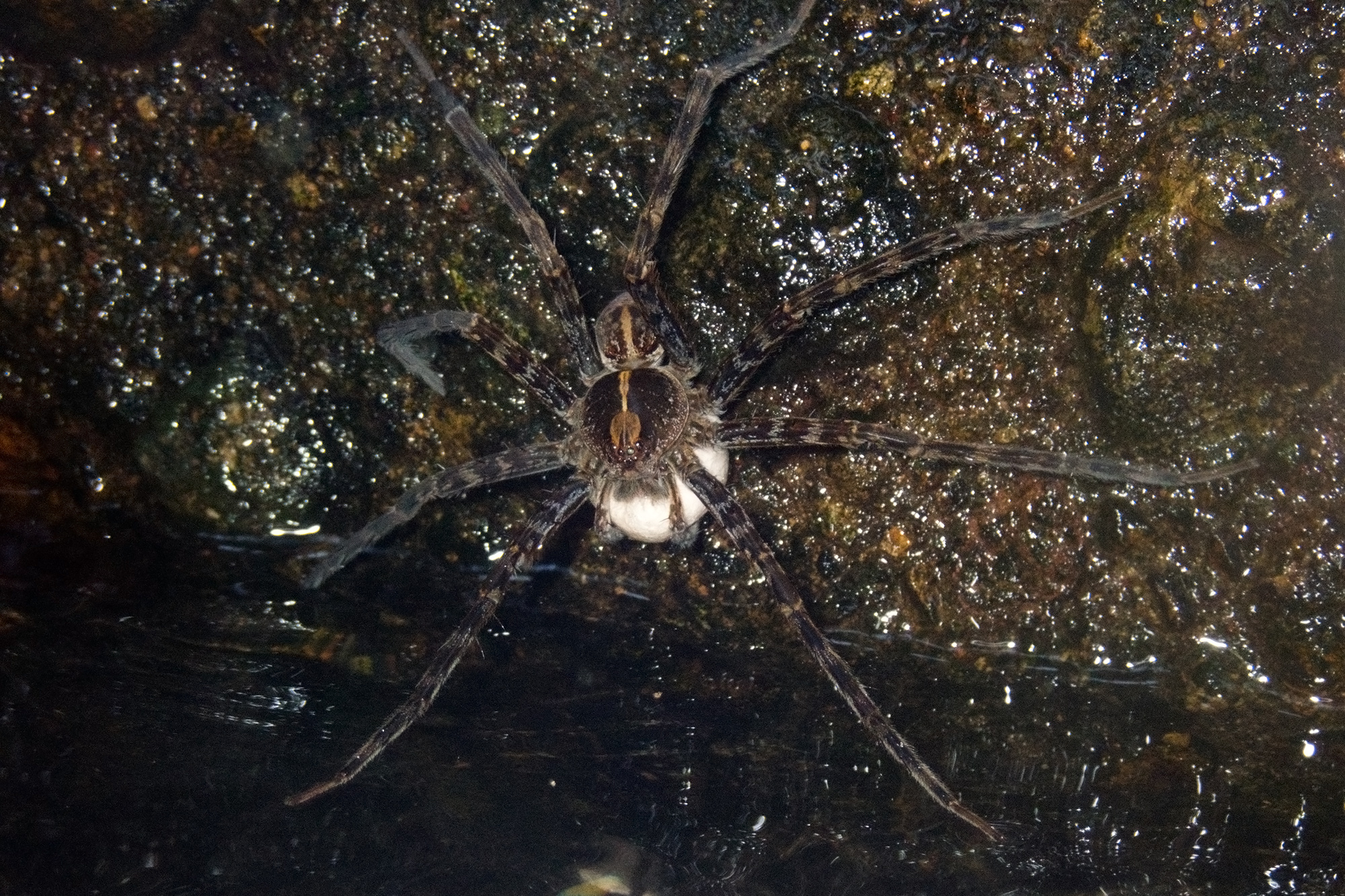 The fishing spider, belonging to the family Pisauridae, is not only capable of diving but the female spider also shows maternal care; she carries the egg sac and continues to carry the hatchlings on her back even after they are born.
In the countryside, there are many different microhabitats where various types of spiders reside. For example, the two-tailed spider prefers to stay on tree trunks, the bird spider hides under stones, and the Parasteatoda angulithorax constructs nests like umbrellas in muddy walls. There are many more unknown species waiting for everyone to discover.
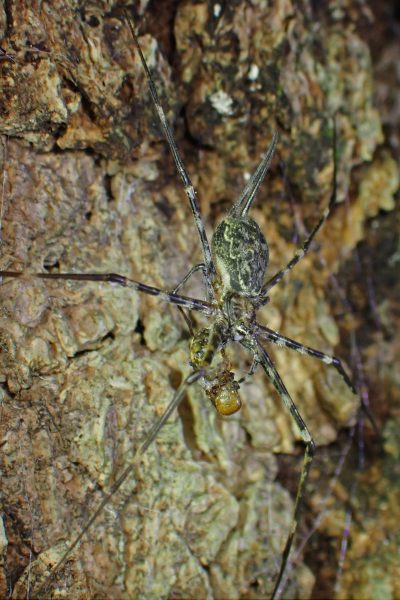
The two-tailed spider, which lives and feeds on tree trunks, is difficult to detect when it is motionless.
【 Subscribe to our newsletter to receive the latest articles by email. 】