

Text:Wong Ho Lam(WEEDsilience)
Whenever I stroll along the rural paths, there are always some inconspicuous small lives silently blooming at my feet. They may not be as tall and imposing as the big trees, but each one hides a surprising story. Some plants choose to blossom at dawn or dusk, while others hide deep in the grass or rise above eye level, often passing by unnoticed. Let’s slow down, adjust our gaze, and take a closer look at these “corner dwellers” that have been forgotten.
Short-Lived Flower:Diffuse Dayflower (Commelina diffusa Burm. f.)
Diffuse Dayflower is a member of the Commelinaceae family, which generally shares two common features: 1. A short flower lifespan; 2. Specific blooming times. The flowers of Diffuse Dayflower bloom at sunrise and close by noon, with a lifespan of just a few hours. To capitalize on this brief golden opportunity for pollination, some of the stamens have evolved into infertile stamens, shaped like the logo of Citistore, to create an illusion that attracts flies, making them think there is a large pollen cluster present. This small yet uniquely shaped herbaceous plant can be found in urban and agricultural areas.
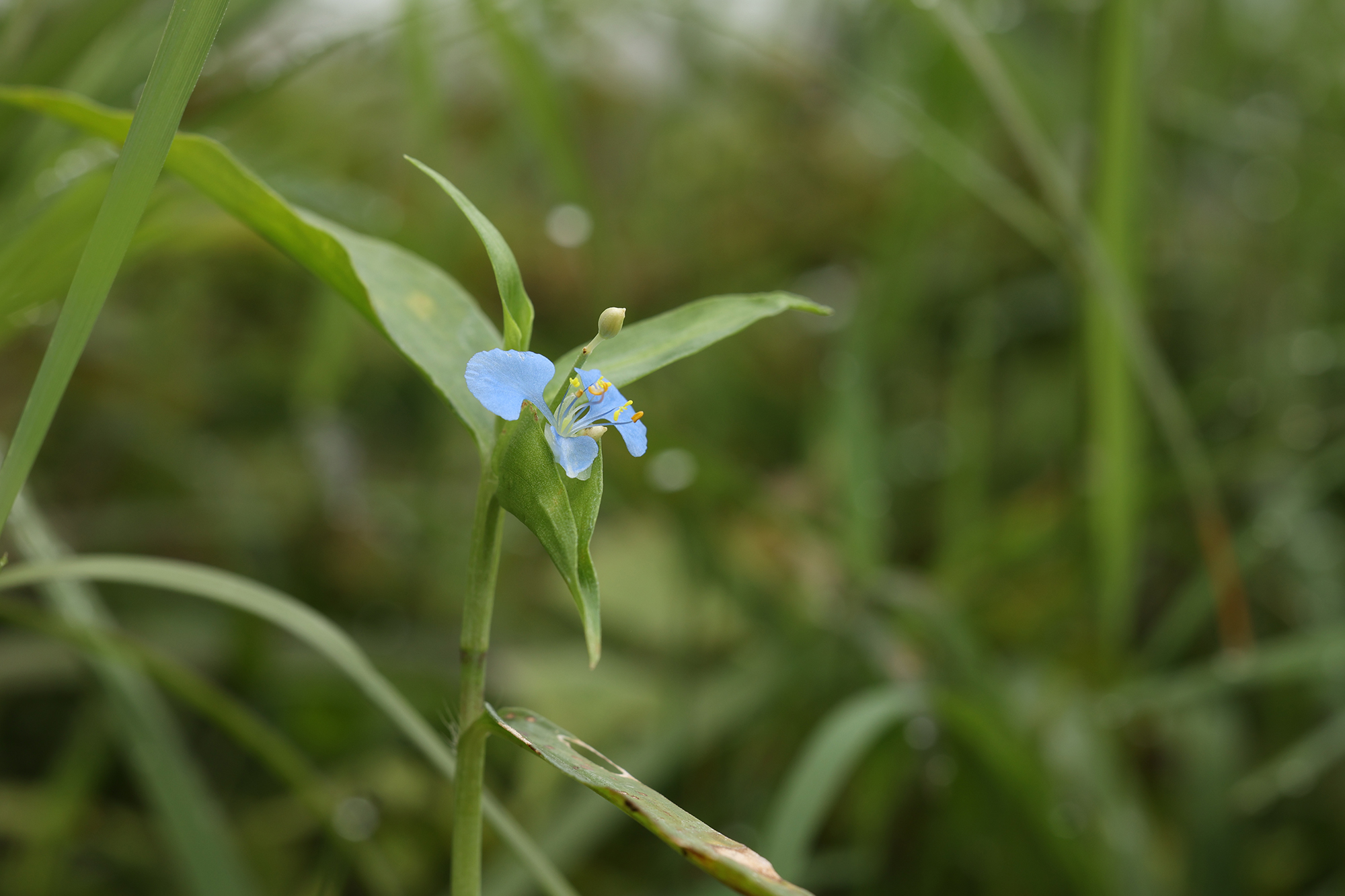 Diffuse Dayflower is a member of the Commelinaceae family.(Photography:Wong Ho Lam)
 The shape of some stamens of Diffuse Dayflower resembles the logo of Citistore.(Photography:Parks and Trails)
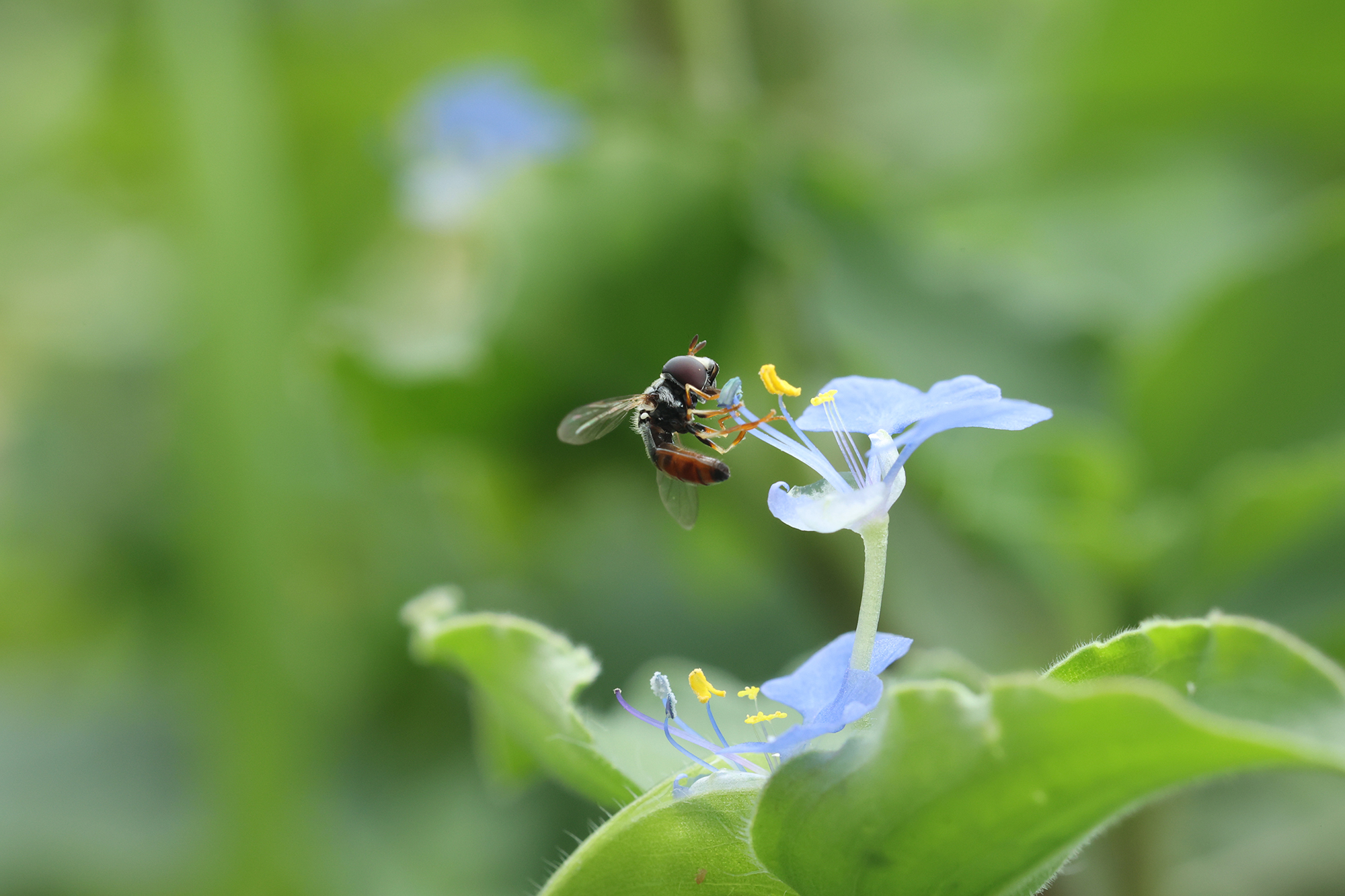 A hoverfly visiting a flower.(Photography:Wong Ho Lam)
Night-Blooming Flower:Wild Snake Gourd (Trichosanthes pilosa Lour.)
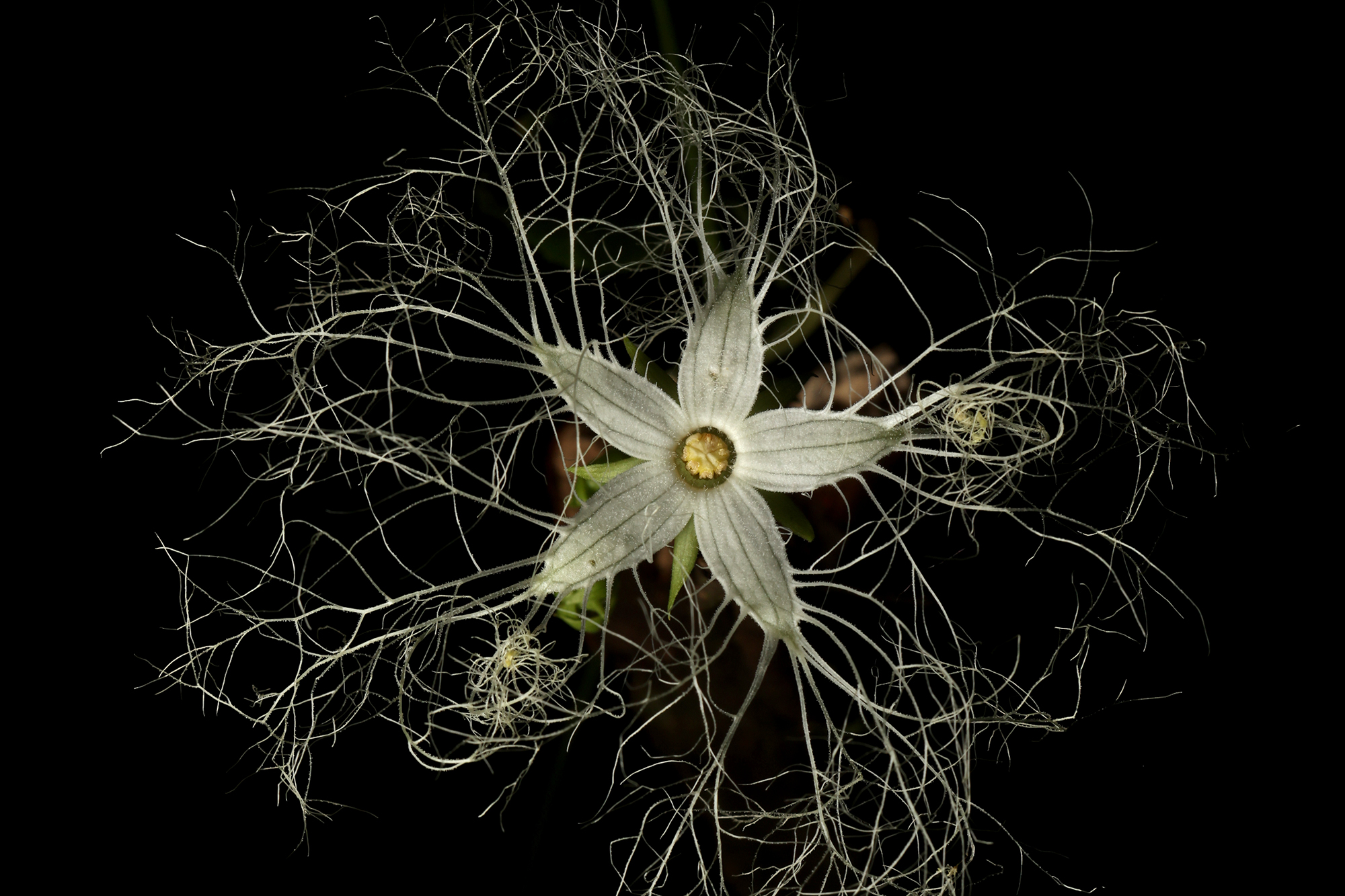
Another plant with a similarly short flower lifespan is the Wild Snake Gourd, which blooms only at sunset and closes before sunrise the next day. One benefit of blooming at night is the reduction of moisture loss caused by high temperatures. In addition, the white flowers are more conspicuous under moonlight, making it easier to attract moths for pollination.
The corolla of the Wild Snake Gourd is fringed with long tassels.(Photography:Wong Ho Lam)
Plant in the Darkness:Thismia tentaculata K. Larsen & Aver.
Thismia tentaculata is one of Hong Kong’s saprophytic plants, named for the three tentacle-like appendages on its flower. Most saprophytic plants lack chlorophyll and cannot produce nutrients through photosynthesis. They emerge from the soil only during the flowering and fruiting period; spending the rest of the year growing underground as tubers or rhizomes. They obtain nutrients by decomposing organic matter through symbiosis with fungi or parasitism. The rainy season, from May to September, is a great time to observe these saprophytic plants, which generally grow among piles of dead leaves, so careful observation of the ground is needed to spot them.
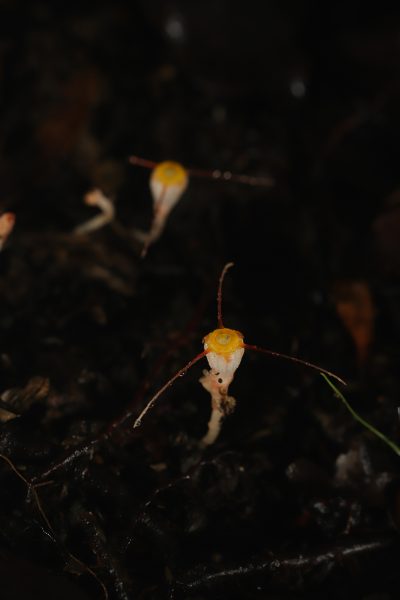
The Thismia tentaculata has three appendages.(Photography:Wong Ho Lam)
The Lofty Parasitic Plant: Dendrophthoe pentandra (L.) Miq.
Dendrophthoe pentandra is a semi-parasitic plant that attaches itself to tree branches to absorb water and minerals while performing photosynthesis. Its fruits attract birds for consumption, with seeds typically dispersed via bird droppings. It is fairly common in Hong Kong, occasionally appearing on trees in urban parks or rural areas. However, it often grows within the tree canopy, making it difficult to spot. As excessive parasitism can adversely affect host trees, urban populations are routinely removed. Consequently, visitors to parks may have the opportunity to observe those that have been removed or fallen on the ground.
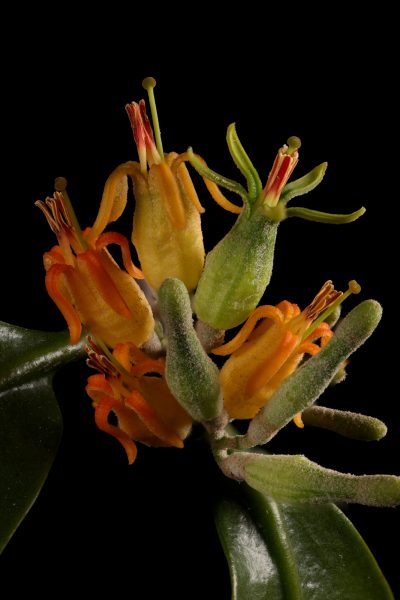
The flowers of Dendrophthoe pentandra gradually change from a pale greenish-white to a reddish-yellow hue.(Photography:Wong Ho Lam)
Beyond the plants mentioned above, Hong Kong boasts numerous habitats and flora worthy of exploration. When strolling along streets or mountain trails, do slow your pace and observe the plants and trees around you with care – you may well make unexpected discoveries.
【 Subscribe to our newsletter to receive the latest articles by email. 】