

Text。Photography:Fearless Dragon Running Team
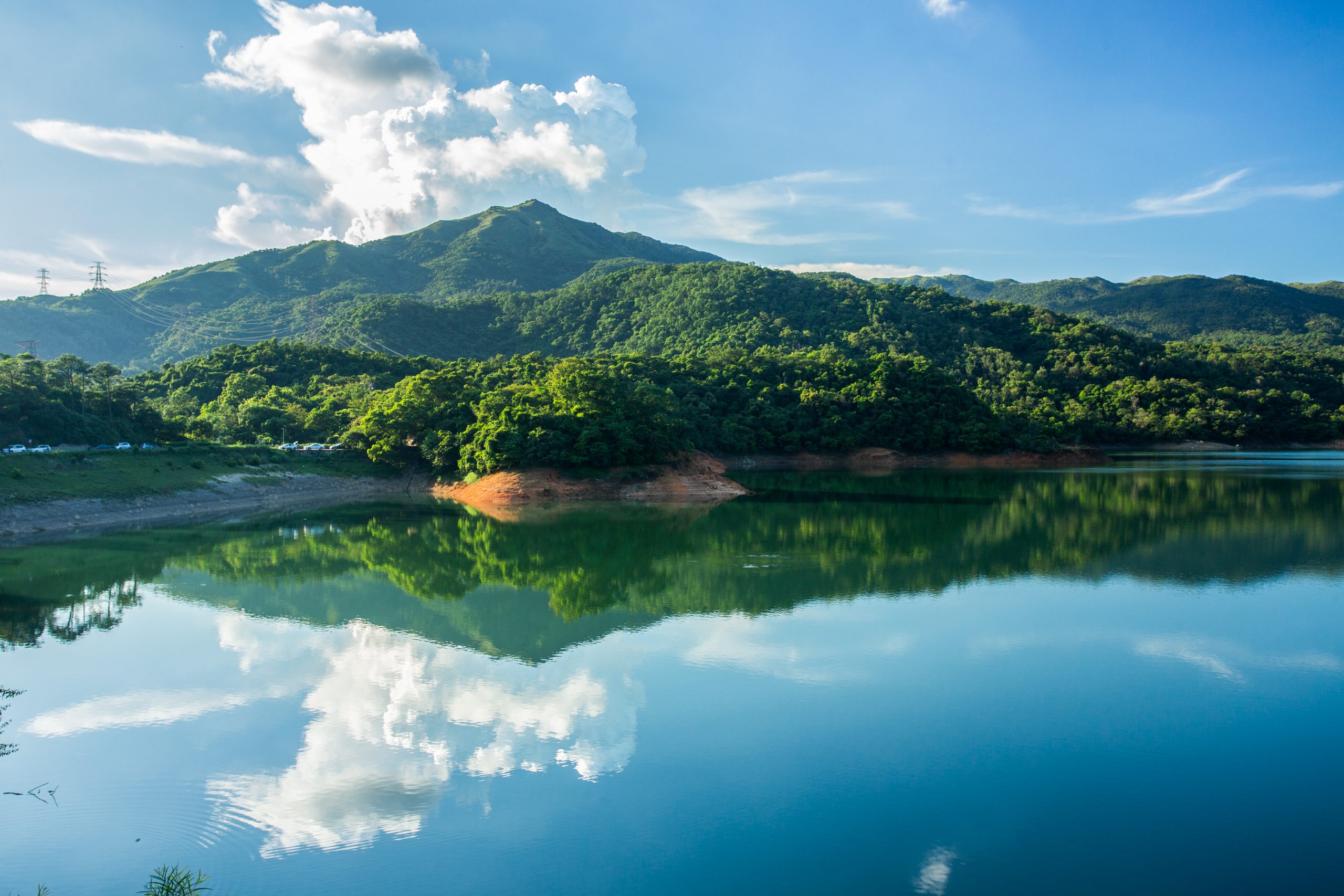
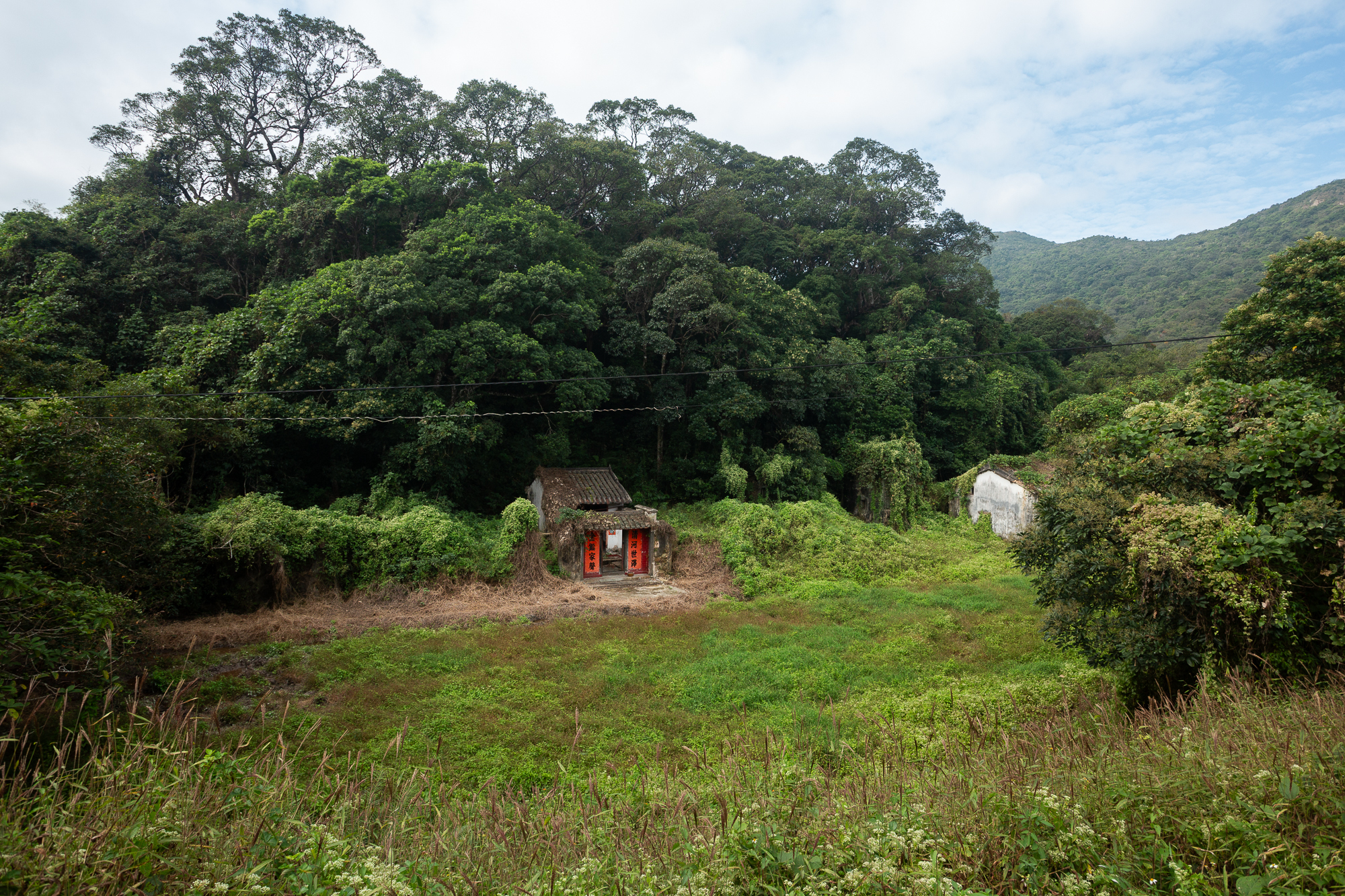
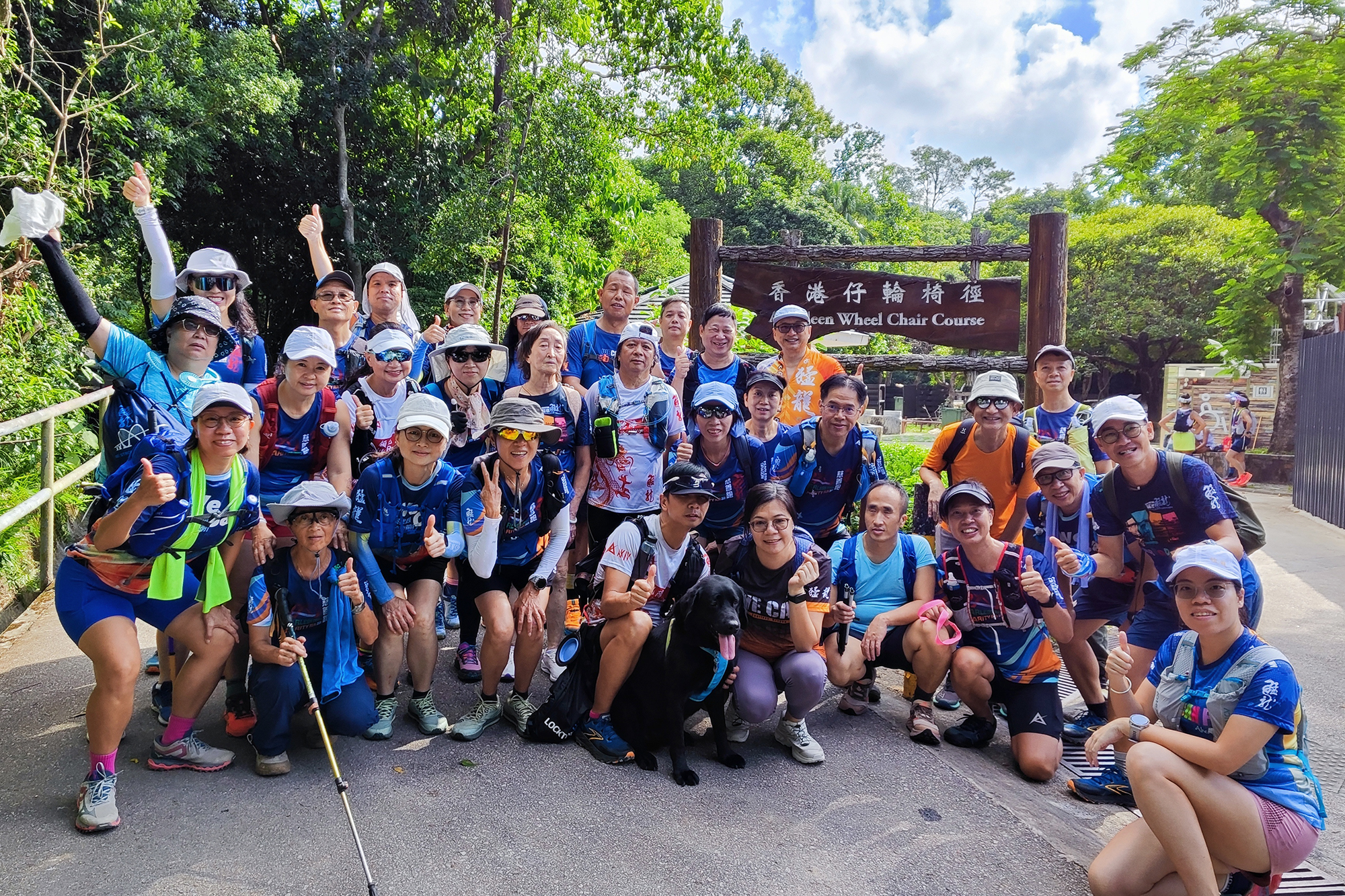
Amidst the bustle of urban life, Hong Kong’s hills and wilderness represent our most precious natural treasures. The Fearless Dragon Running Team, composed of visually impaired, hearing impaired, and able-bodied individuals, firmly believes that the beauty of nature should belong to everyone, regardless of physical condition or sensory ability. The team is dedicated to promoting participation in running and hiking activities among persons with disabilities, fostering an inclusive mountain community that champions the principle that ‘nature belongs to all.’ To further embody inclusivity and mutual respect, we uphold the spirit of embracing heaven, earth and humanity with care and unity. We encourage transcending disability barriers, appreciating each other’s diversity and contributions.
“Overcoming disabilities, achieving the extraordinary.”
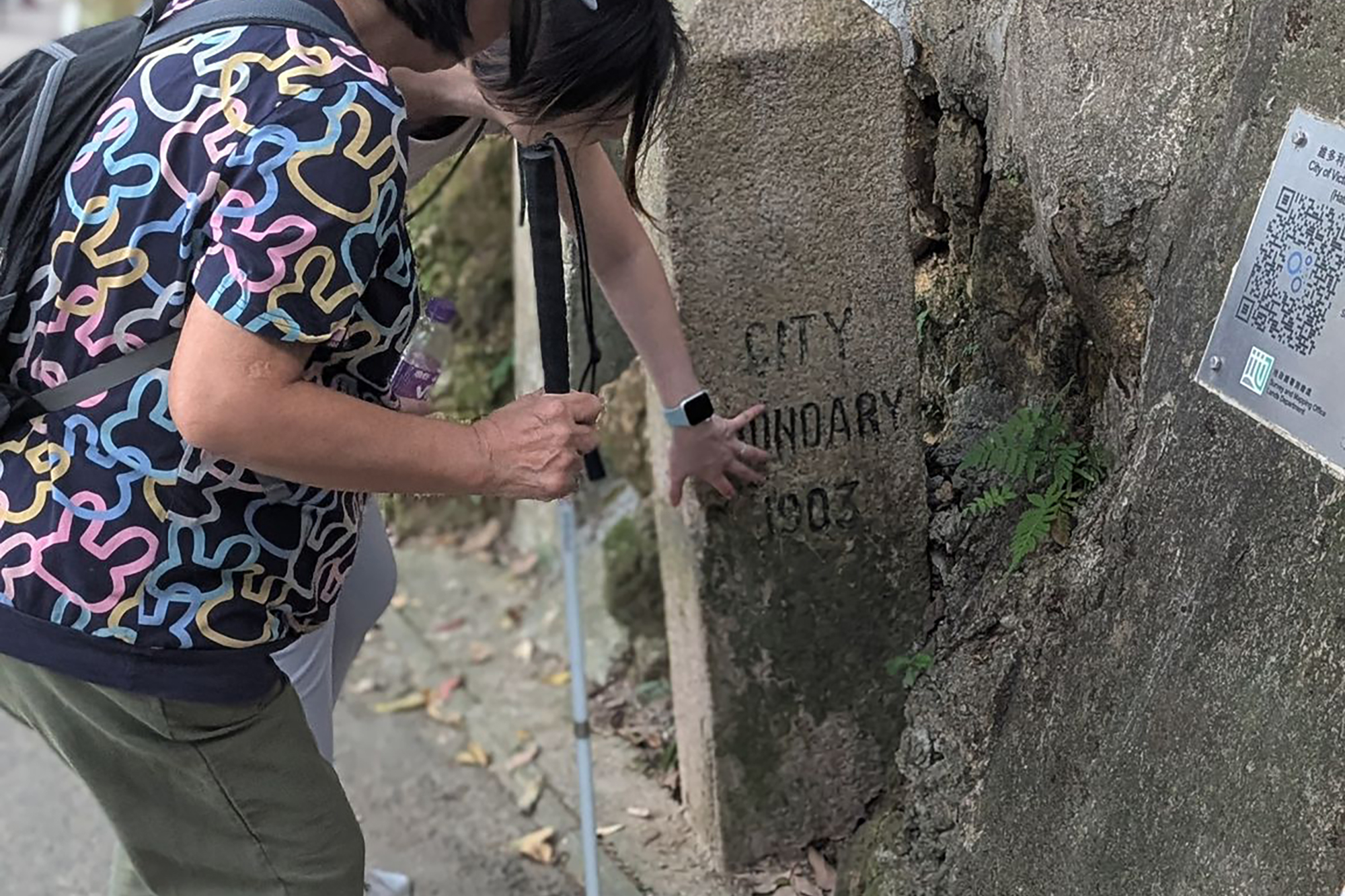
The primary difficulties faced by the visually impaired when hiking stem from the safety challenges posed by rugged mountain trails and ever-changing terrain. Unable to rely on sight to assess trail conditions and environmental shifts, they face heightened risks of falling or getting lost. Furthermore, the unpredictability of the hiking environment—such as sudden weather changes or unexpected obstacles—poses significant threats to their safety. While risks and challenges undoubtedly exist, one can still experience nature’s beauty through sensory means beyond sight: the sound of flowing rivers, the shifting melody of wind through trees, changes in air humidity, the scent of grass and flowers. By exploring terrain characteristics through touch and footsteps, using hands to feel and feet to sense the unique features of the landscape, every step becomes meaningful.
The primary challenges faced by deaf individuals when hiking include an inability to receive environmental auditory cues such as warning sounds, animal noises, or verbal prompts from fellow hikers. This impairs their capacity for immediate responses to changes in their surroundings. Due to their auditory limitations, they rely more heavily on visual cues and hand gestures for directional guidance and safety information during hikes. However, the absence of sound often leads them to focus more intently on capturing and sharing scenic views via mobile phones, preserving these cherished memories to share with others.
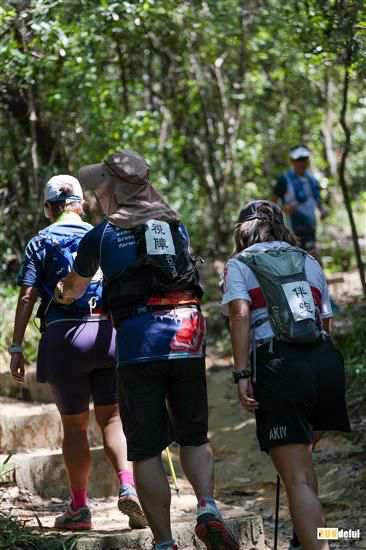
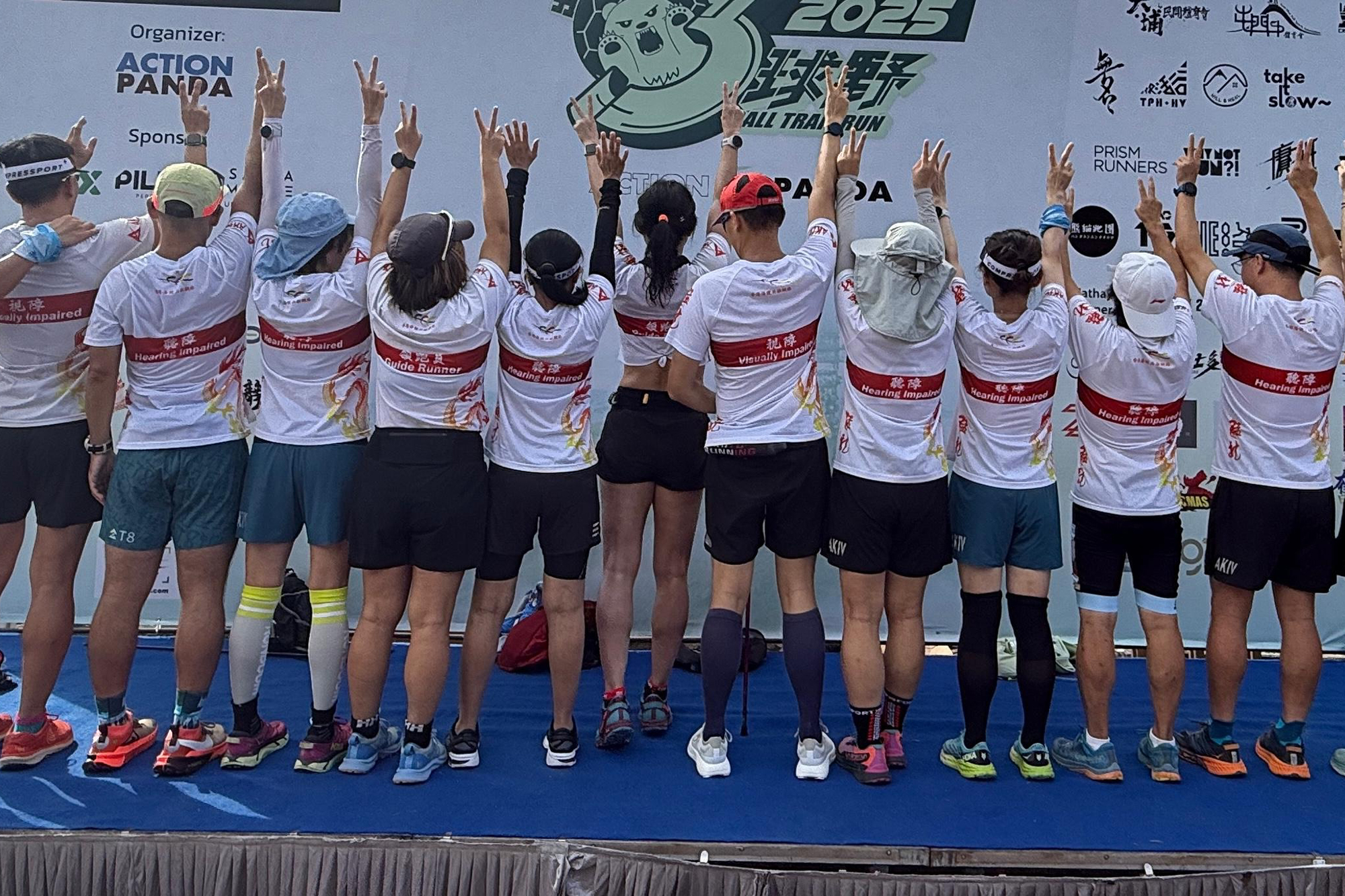
Signage for the visually impaired and guide runners.
This inclusive initiative requires a special group of individuals—guide runners—who, with professional expertise and patient companionship, lead these courageous individuals through natural obstacles to experience the allure of the mountains and wilderness. Accompanied by professional guide runners, the visually and hearing-impaired safely explore the diverse landscapes of mountain trails through sensory engagement and mutual cooperation.
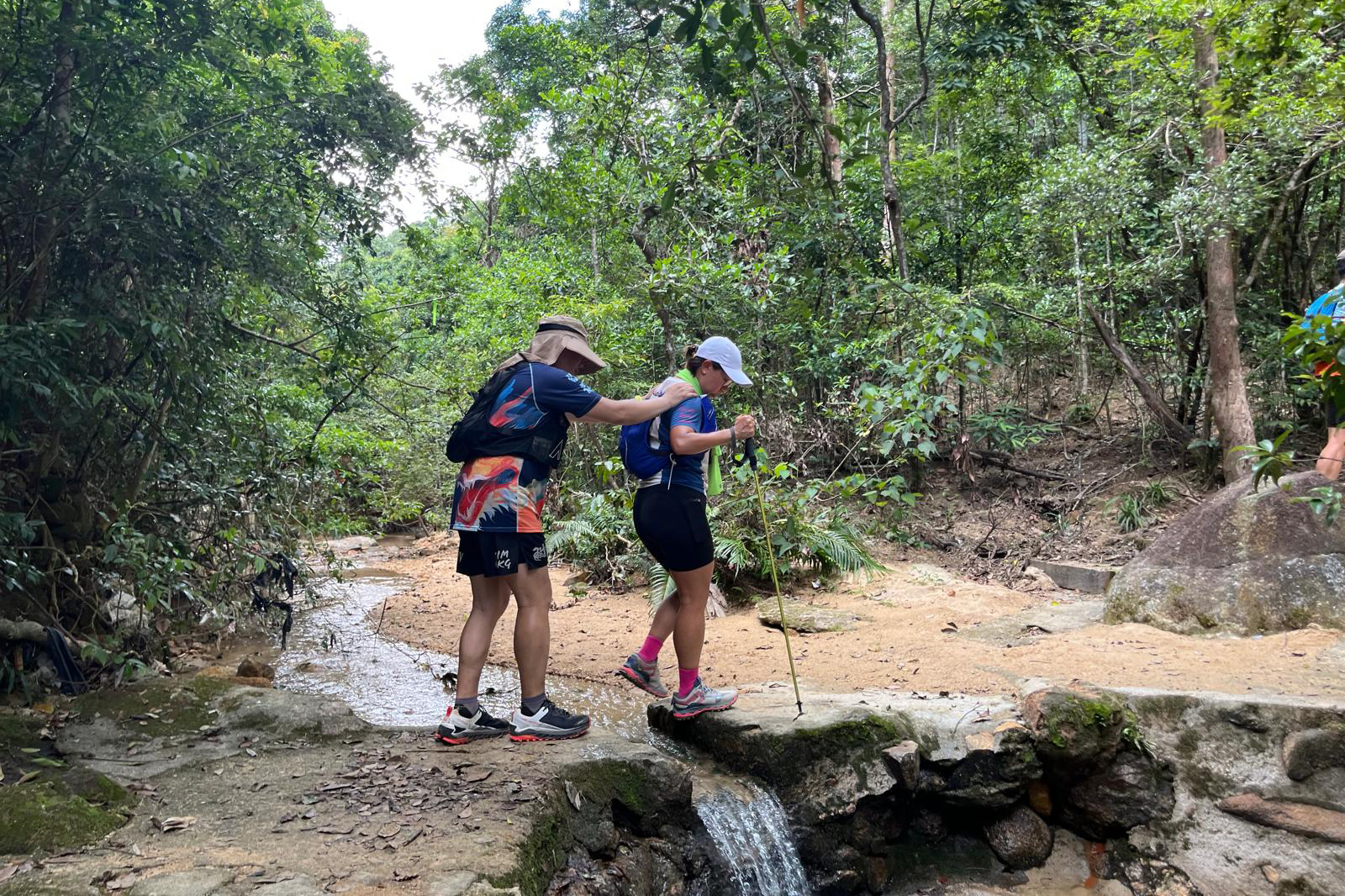
Guide runners lead the visually impaired across rivers; they are not merely pathfinders, but companions and bridges of trust.
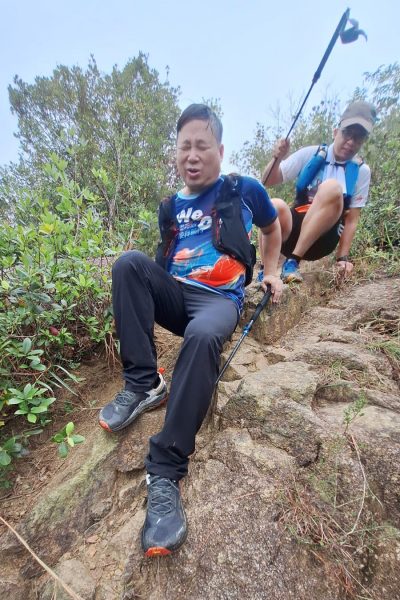
Guiding the visually impaired downhill.
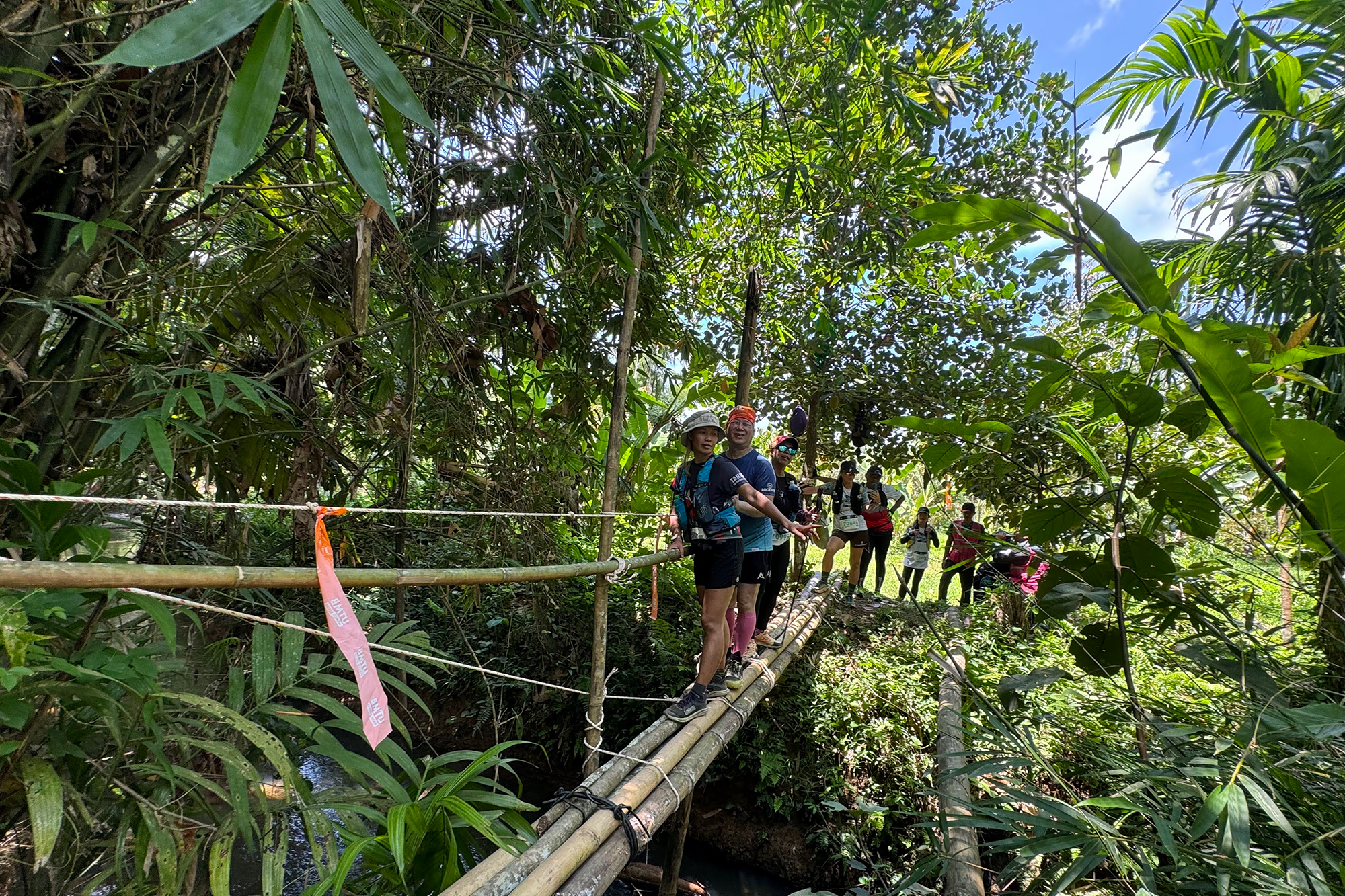
Guiding the visually impaired across a log bridge during the UTMB event.
However, the role of a guide runner extends far beyond mere “escort”; they serve as a bridge promoting social inclusion and integration. Through keen observation, first-aid knowledge and guiding techniques, they lead teammates through natural obstacles. Serving as a guide runner requires not only familiarity with mountain trails but also the ability to adapt promptly to each team member’s specific needs. For visually impaired runners, guides employ the ‘backward hiking method’, ropes, or verbal cues to indicate direction and terrain changes; for hearing-impaired runners, key information is conveyed through hand signals and visual cues. This two-way collaboration fosters profound trust while instilling courage and confidence in team members.
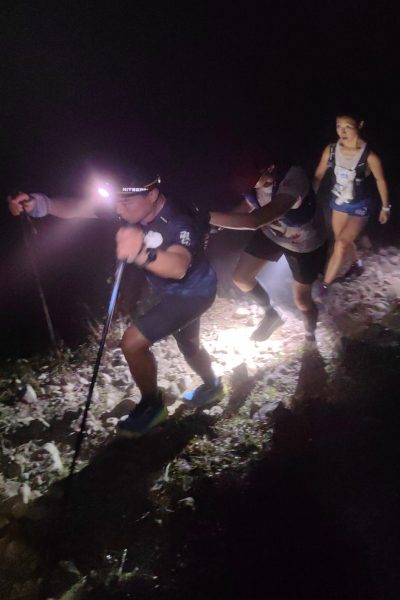
Guide runner training encompasses skills such as pacing, first aid and sign language, alongside local ecological knowledge, with experienced members providing personalised guidance.
The Fearless Dragon Running Team places great emphasis on seamless coordination between guide runners and their disabled teammates, employing a dedicated pairing process. The team meticulously matches guide runners with disabled runners based on their abilities, personalities, and needs, ensuring mutual support as they push beyond their limits together.
The running team is a close-knit family where members trust and assist one another. At every event, guide runners and disabled runners are not merely running companions, but true partners and friends. During trail runs, encouragement and support often outweigh the perceived distance; a simple cheer or a clasped hand can dispel fatigue and fear. This spirit of cooperation not only enables each individual to challenge themselves, but also builds heartfelt connections between participants.
This journey, we walk it together, we run it together.
Reference
- Fearless Dragon Running Team Facebook Page
- Hong Kong Network for the Promotion of Inclusive Society Instagram Page
- Hong Kong Network for the Promotion of Inclusive Society:Fearless Dragon Guide Runner,2025
【 Subscribe to our newsletter to receive the latest articles by email. 】