

Author: Clarion Chan (Parks and Trails)
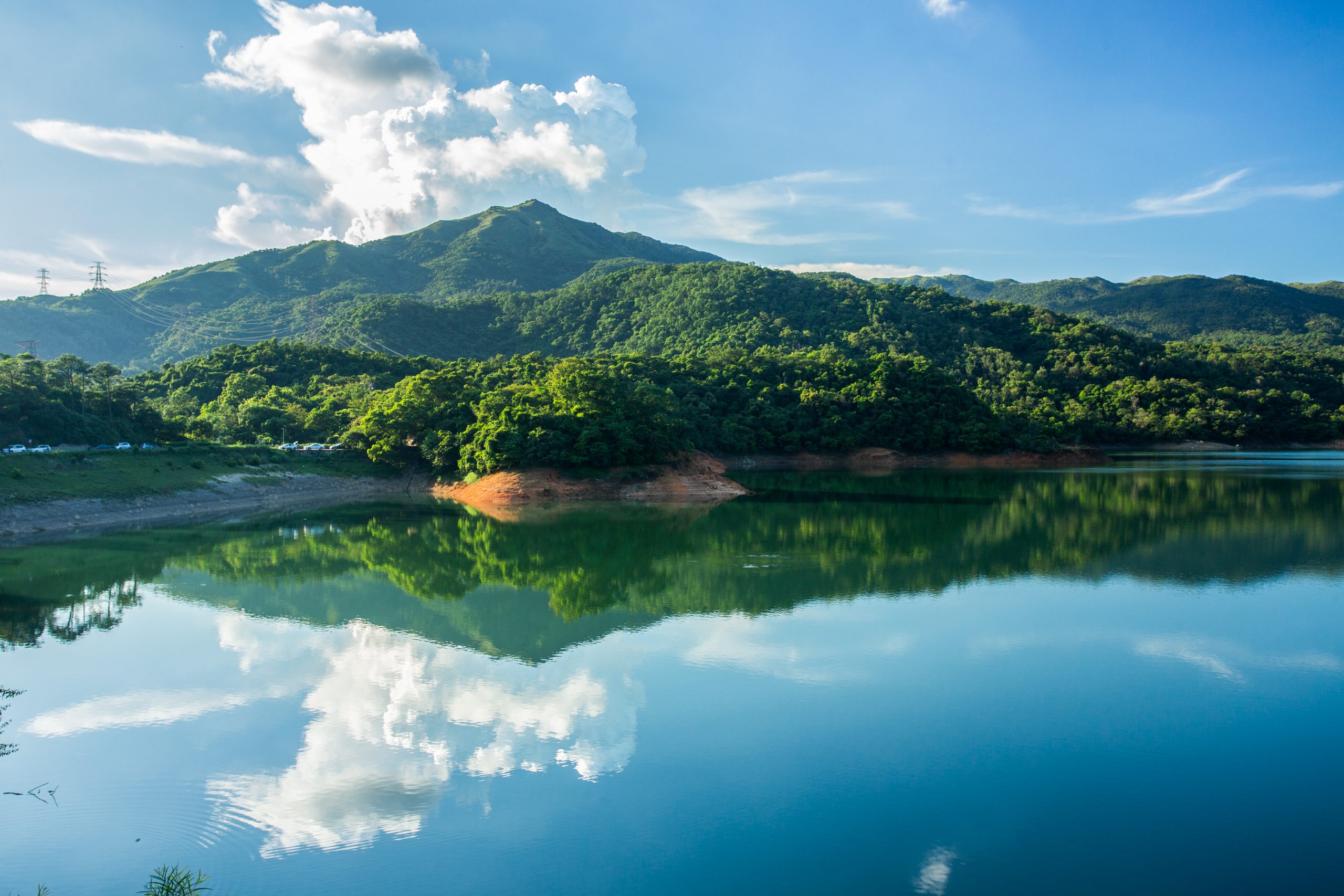
When we talk about Hong Kong’s country parks, many people think of hiking up Lion Rock, strolling around Shing Mun Reservoir, or enjoying the shade of Tai Tam’s trees. But these beloved landscapes did not just happen by chance. They were the result of bold decisions made in the 1970s — a time when Hong Kong was going through big changes.
At the centre of it all was Sir Murray MacLehose, Hong Kong’s longest-serving governor (1971–1982). He is remembered for many things — public housing, the ICAC, and of course the famous MacLehose Trail. But one of his quieter, yet hugely influential legacies was the establishment of the Country Parks Ordinance in 1976, which gave us our first four country parks.
Most people think of these parks simply as green havens for recreation and conservation. And that is true — but there is more to the story. The creation of country parks was also about politics, identity, and social stability at a time when Hong Kong was uncertain about its future.
So how did this all come about? Let’s take a walk back in time.
Before the “MacLehose Era”
Hong Kong’s forests had been through a turbulent history. During the Japanese Occupation in the 1940s, when firewood imports from China were cut off, local trees were felled rapidly for timber and fuel. Reforestation became urgent after 1945.
In the 1950s, Governor Grantham introduced a forest policy aimed at controlling soil erosion and improving water supplies. Interestingly, it also tried to promote private forestry for profit — though that idea did not really succeed.
By the mid-1960s, a new concern had emerged: recreation and conservation. A 1965 report from the Agriculture and Fisheries Department highlighted the urgent need for open spaces for Hong Kong’s dense urban population. Soon after, in 1967, Governor David Trench created the “Provisional Council for the Use and Conservation of the Countryside” to investigate the proposal of establishing CPs and to make a comprehensive study of the policy issue. It consisted of 19 members representing different interests. Later in 1970, he appointed 2 more Advisory Committees to advise on matters related to recreation development and nature conservation on Hong Kong Island and in the New Territories. The Committees also had to prepare a five-year programme with estimates of cost. this shows that the preliminary idea of building a country park system in Hong Kong actually emerged in the 60s.
Although MacLehose was not the first person to propose the idea, it was him, as a keen conservationist and an avid hiker, who started the firm preparation for building the country park. Coming to power in 1971, MacLehose gave personal support to the establishment of country parks. After five years of active preparation, the ordinance was finally enacted in 1976. The first four country parks were Shing Mun, Lion Rock, Aberdeen and Tai Tam, following international conservation principles.
However, an important question here: apart from his personal passion for conservation, why was MacLehose the one who was able to put the idea of having a country park system into real-life implementation?
Hong Kong in the 1960s and 70s: A Changing Society
To answer that, we need to understand the times.
Hong Kong in the 1960s was a city under pressure. Waves of migrants from mainland China, who planned to stay permanently in Hong Kong, were reshaping society. Housing shortages, poverty, and social tensions were rising. This explains why the first ever major attempt to review various provisions for social services was carried out in the mid 60s. For example, a White paper titled “the Development of Medical Services in Hong Kong” and a working party report entitled “Review of Policies for Squatter Control, Resettlement and Government Low-Cost Housing” was published in 1964.
In fact, 1967 saw a major leftist riot, inspired by the Cultural Revolution across the border. Although the riot ceased within months, local communist sympathisers in Hong Kong, for example, those who were called the “homelands” (guocui pai 國粹派) college student, continued to support the rationalist idea of actively participating in the modernisation of the real “Red China” and joined the Defend the Diaoyu Island Movement.
In order to prevent similar civil disturbances in the future, a subsequent commission of inquiry highlighted the urgent need to provide recreational outlets for the youth. This is because in 1966, 56% of the population was less than 24 years old. However, it is argued that the proposal for providing recreational outlets did not only aim to distract the youth from political participation, but also to isolate the leftists by further creating and emphasising a distinctive way of life for the Hong Kong people. Such an attempt could be proven by the series of featured articles the British government published in popular newspapers, which focused on describing how the Chinese and the Hong Kong people were different in lifestyle. For example, one feature article mentions that the troublemakers (the leftists) urge the local young people to “give up the American way of life”, and all the things that “make our lives worth living and make sense to us.”
This clearly demonstrates the colonial government’s realisation on the necessity and effectiveness of a stronger intervention into local people’s daily life after the 1967 riot. This explains why the 70s governance was different from the usual laissez-faire policy, as well as the harsh and discriminatory control towards the locals.
Building Green Spaces as A Political Strategy
There was another layer too: politics.
First, in order to counter the rising political influence of China that threatened colonial governance, MacLehose attempted to consolidate the British colonial power through building “civil pride” among people in Hong Kong. As early as late 1971, shortly before MacLehose’s inauguration, he already noted in the Guidelines for the Governor Designate that “we must work out policies in Hong Kong consciously designed to prolong confidence.” A year later, in the review of his first-year governorship, he further added the point that “we cannot aim at national loyalty, but civic pride might be a useful substitute.” He believed that such civil pride could be achieved through corporate effort and a new policy that aimed to “make both the elite and the masses feel, as they felt in 1967, that Hong Kong is an entity to which they belong, and the place they wish to live in.”
Although MacLehose did not specifically mention the implementation of the country park system as a means to building civil pride, it is sensible to assume that it aimed to increase people’s sense of belonging by creating a nice natural environment for recreational purposes. As argued by KM Kwong, MacLehose’s specific idea was to ensure the loyalty of the people of Hong Kong and strengthen people’s identification with the Government by “maintaining Hong Kong’s living standards that lead China significantly” and by “cultivating responsible citizenship.” Building country parks could serve this purpose of improving the quality of life, and hence further distancing the Hong Kong people from the mainland Chinese.
Furthermore, the British authorities realized the need to distract Hong Kong people from the fact that British governance might come to an end. After the 1967 riot, the British government realized that British rule in Hong Kong beyond 1997 was “simply untenable”. Also, they predicted that the Chinese government would not agree with the extension of the lease. This pessimism was clearly shown in the report Hong Kong: Long Term Study, a document prepared by the Cabinet’s Ministerial Committee on Hong Kong in the aftermath of the riots. However, there was still a slight hope that a favorable condition could emerge when the successor of Mao came to power. Therefore, they concluded that they had to continue to ensure the development and stability of the colony, which could perhaps serve as a bargaining power in the future. This is why they had to keep consolidating people’s confidence in their administration by accelerating a long term social reform, as mentioned in the Hong Kong Planning Paper in 1976. The country park system is clearly one part of the reform that has a far-reaching aim for the preservation of nature.
Lasting Legacy
In conclusion, the creation of Hong Kong’s country parks in the 1970s was about much more than trees and trails. While MacLehose’s love of hiking certainly played a part, the implementation of a country park system was also about responding to social tensions, giving young people outlets, building a sense of belonging, and even buying time for an uncertain colonial government.
Half a century later, these decisions still shape our lives. Country parks remain one of Hong Kong’s greatest treasures — places where millions hike, picnic, and recharge. They are green sanctuaries in one of the world’s busiest cities, and they continue to give us pride in the unique identity of Hong Kong.
In that sense, the story of our country parks is also the story of Hong Kong itself: resilience, adaptation, and the search for belonging in a changing world.
Bibliography
-
- Agriculture, Fisheries and Conservation Department. “Hong Kong: The Facts – Country Parks and Special Areas.” Accessed 8 Dec 2025.
- Corlett, Richard T. “Environmental Forestry in Hong Kong: 1871–1997.” Forest Ecology and Management 116, nos. 1–3 (1999): 93–105.
- Daley, P. A. Forestry and Its Place in Natural Resource Conservation in Hong Kong: A Recommendation for a Revised Policy. Hong Kong: Agriculture and Fisheries Department, 1965.
- Jim, C. Y. “The Country Parks Programme and Countryside Conservation in Hong Kong.” The Environmentalist 6, no. 4 (1986): 259–70
- Hong Kong Biodiversity: Newsletter Issue 1‑3. Hong Kong: Biodiversity Information Hub, Agriculture, Fisheries and Conservation Department, February 2002.
- Kwong, K. M. Governing Hong Kong: From British to Chinese Rule. Hong Kong: Enrich Professional Publishing, 2015.
- Luk, G. C. “Straddling the Handover: Colonialism and Decolonization in British and PRC Hong Kong.” In From a British to a Chinese Colony, 1–49, 2018.
- Sung Tak Hui (許崇德). “Luk Cat Bou Dung jyu Hoeng Gong Jan San Fan Ji Sik Dik Meng Saang” (『六七暴動』與『香港人』身份意識的萌生) [“The Emergence of ‘HongKonger’ Identity Consciousness in the Context of the ‘1967 Riots’”]. 21st Century (二十一世紀), no. 169 (2018): 77–94.
- TNA, FCO 40/329, “C M MacLehose to Sir Leslie Monson, Mr Wilford, Mr Morgan and Mr Laird,” 16 October 1971.
【 Subscribe to our newsletter to receive the latest articles by email. 】