


Author: Clarion Chan (Parks and Trails)| Photographer:Teddy Law (Parks and Trails)
Country parks have long been a treasure for the people of Hong Kong. Since the Country Park Ordinance was passed in 1976, millions have flocked to these green spaces. On weekends, it was not uncommon to see busloads of people arriving—families, hikers, and nature lovers—all eager for a break from the city’s hustle and bustle.
But our enjoyment of nature does not come without a cost. Increased human activity can lead to lasting environmental damage. That is why environmental governance is essential—not just from the government, but from civil society as a whole. Environmental NGOs (non-governmental organizations) have played a key role in defending our natural spaces, especially when development threatens conservation.
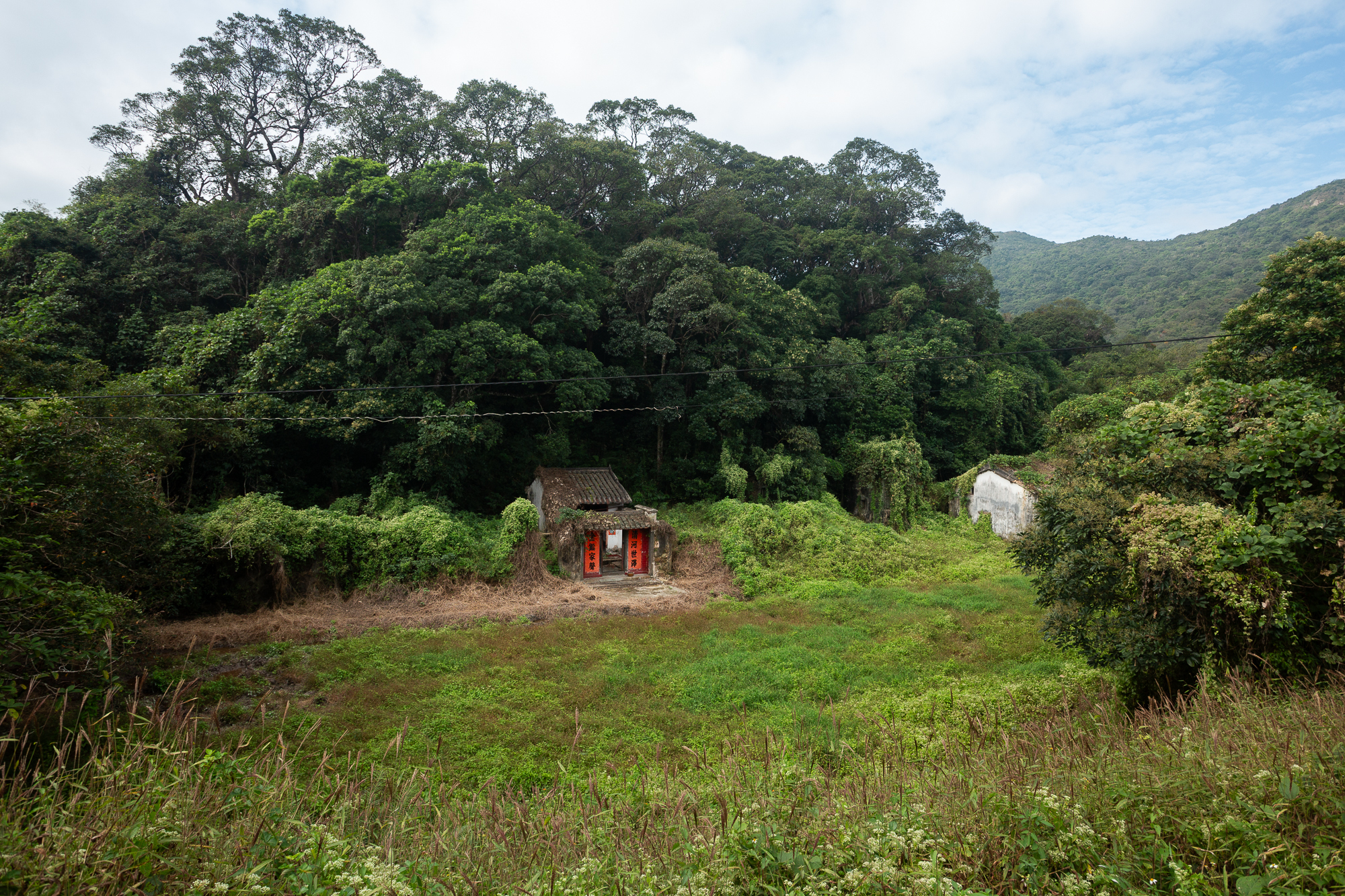
Back in the late 80s and 90s, these NGOs demonstrated a strong determination and passion for safeguarding the biodiversity of our land when a development company proposed to transform Sha Lo Tung, a freshwater wetland that is home to many rare species, into a golf course. While they managed to put a halt to this project, they were unable to mobilize broader social forces for environmental causes. Here, this article takes a closer look at the Sha Lo Tung case to understand not just what environmental NGOs achieved, but also where they fell short.
A brief history of environmental NGOs in Hong Kong
A few years before Maclehose’s ruling, the first environmental NGO in Hong Kong, the Conservancy Association (CA), was established in 1968 by a group of professionals inspired by the environmental consciousness of the West. In its early years, CA was bold—joining grassroots campaigns like the anti-oil refinery protests on Lamma Island and the campaign against night flights at Kai Tak Airport. But by the mid-70s, CA shifted gears. It started working more closely with the government. They accepted the government’s invitation to join the businessman-dominated Advisory Committee on Environmental Pollution in 1974.
The history of CA was quite particular as most environmental NGOs only emerged in the 80s, when the political context was more favorable. The 80s witnessed an important change in colonial government’s policy from carrying out a limited to a full-on acceleration of the democratization process. This is due to their fear of an exodus of Hong Kong residents following the Sino-British Joint Declaration in 1984, which could be very harmful to their economic interests.
Under this political climate, several major environmental NGOs were founded:
- World Wildlife Fund (WWF) (1981), a low-profile NGO dedicated to wilderness preservation, established by a group of foreign businessmen and conservationists.
- Friends of the Earth (FoE) (1983), founded by a group of expatriates, which was active in confrontational actions in the 80s, such as the Anti-Daya Bay campaign.
- Green Power (GP) (1988), established by a group of young middle-class professionals from different fields.
Nevertheless, one noteworthy point is that both FoE and GP have been less radical in the 90s. This, interestingly, resembles the trajectory of CA which leaned toward collaboration rather than confrontation after several years of their operation. For example, FoE has started to focus more on non-confrontational actions, including environmental exhibitions and recycling campaigns, while the GP has replaced their sharp anti-establishment criticisms with a philosophical perspective of “protecting the environment by changing individual lifestyles.”
The Sha Lo Tong Controversy in 1992
Despite this strategic turn, environmental NGOs still adopted a confrontational approach to opposing the Sha Lo Tung project in 1992, as they launched a legal challenge to the proposal. The origin of this controversy can be traced back to the late 1970s. In 1979, Sha Lo Tung Development Company Limited acquired privately-owned land from local villagers in Sha Lo Tung and promised to build the small houses (ting uk) for them free of charge. In Hong Kong, where property prices are extremely high, such generous offers from the corporate naturally won strong support from the villagers.
In 1982, the company announced plans to develop low-density residential housing, New Territories small houses (ting uk), and a golf course in Sha Lo Tung. The development plan not only involved farmland acquired from the villagers but also encroached upon 43 hectares of land in the Pat Sin Leng Country Park. In 1990, the Country Parks Board advised the Country Park Authority (CPA) to give formal approval to the Lands Department to approve this development proposal, as they believed this project would help improve the recreational facilities there.
Six environmental groups, including CA, FoE, Green Lantau Association, GP, WWF and the Lamma Island Conservation Society, protested this proposal. They carried out various actions, including petitions, a signature campaign, submissions to elected and appointed officials, study tours to Sha Lo Tung and gathering at the entrance of Pat Sin Leng country park. However, their efforts were in vain.
Eventually, these environmental groups applied for a judicial review of this decision of the CPA in 1992. The High Court ruled that the CPA acted ultra vires when it approved the proposed development. The project was therefore put to a halt.
At first glance, this seemed like a major win. But was it?
Success and Limits – Why the NGOs could not build a mass environmental movement?
Indeed, these environmental NGOs achieved a partial success in this legal action, although the proposal was not fully dropped. Yet, they failed to generate lasting public support, and hence a sustained and broad-based social mobilization. This severely hinders the possibility of finding a long-term solution when environmental actions confine themselves within the legal and administrative framework. The Sha Lo Tung case proves this point: in the years that followed, some frustrated villagers began reclaiming the land on their own—damaging wetlands, drying up rice paddies, and disrupting the delicate ecosystem. This was only resolved in 2017 when the private land was formally handed over to the government for conservation through a non-in-situ land exchange with Sha Lo Tung Development Company.
However, why were they unable to facilitate a broader movement?
Part of the answer lies in the political context. According to social theorists Lipsky, Eisinger and Tilly, the timing and the ultimate fate of movements were powerfully shaped by the variable opportunities afforded challengers by changes in the institutional structure of political systems and shifting policy preferences and alliances of established “polity members.” In other words, the political context determines the chance of whether a mass mobilisation can happen.
Tracing back to the 80s and 90s, the political opportunities for a mass movement to occur have been diminishing due to the increasingly stable and democratic government. Since the 80s, the colonial government progressively incorporated green groups into its consultative machinery. In 1993, such incorporation was even officially institutionalized when appointment to the consultative committees was made not only on a personal basis, but as representatives of major green groups. Through negotiating with the government, the NGOs learned how to put external pressure on the government while keeping a friendly working relationship with them. With the aim of maintaining this relationship, they turned down the possibility of having opposition actions that they knew the government would not like.
Furthermore, the rather stable legal system of Hong Kong at that time encouraged environmentalists to adopt legal means to deal with environmental issues, as reflected in the Sha Lo Tung case. This is also due to the fact that most environmental NGOs were headed by people with middle-class professional backgrounds who were not experienced in mass mobilisation.
Resources, Not Just Passions, Are Key
Nevertheless, these prominent NGOs did have some connections with grassroot communities. For example, the Green Lantau Association and the Lamma Island Association were two grassroot groups who also participated in filing the judicial review for the Sha Lo Tung project. So what was the real reason behind such weaknesses?
This answer is simple: it is always a matter of resource availability. According to social theorist Charles Tilly, apart from political opportunities, organizations need an effective mobilization of both material resources (money, organizations, manpower, technology and means of communication) and non-materials resources (legitimacy, loyalty, social relationships, networks, etc) to carry out a successful movement.
Hong Kong’s green groups lacked both. First, they suffered from a lack of staff and personnel. According to Chiu, most environmental organizations have only a thin layer of staff members and most activities must be entrusted to volunteers whose participation is often intermittent. Additionally, thanks to democratization and liberalization in the 80s, many environmentalists turned their focus to participating in political activities. For example, most leaders and their members in the anti-Daya Bay campaign switched to the political battlefield – the 1988 District Election for Legislative council after the movement subsided. This shows how political opportunities shaped resource allocation, and thus reducing the possibility for a larger mobilization.
Another materialistic concern is the source of finance. Environmental NGOs relied on funding from donors, meaning that they had to maintain a good relationship with them in order to secure their finances. This could be problematic because first, the government is usually one of the biggest sponsors, and second, some leaders of the environmental NGOs accepted corporate sponsorships. For example, in the Nam Sang Wai redevelopment project, the developer is very active in soliciting the support of the green groups. Some prominent members have even been involved in preparing the proposal for the developer. This led to not only a conflict of interest, but also a confidence crisis among the public, who started to doubt the legitimacy of these NGOs. As legitimacy is a non-material resource, this problem further reduces the chance for these NGOs to mobilize the public.
Apart from difficulties at the organization level, there was a lack of media coverage of the environment among the public. A recent study revealed that environmental issues accounted for only 6.2% of all 1 719 identified social conflict issues that appeared in a major newspaper (Ming Pao Daily News) for the period 1980 to 1991. In the same study, it was shown that, out of a total of 106 identified environmental issue reports, most of them were about community/locality-specific environmental problems (75.5%), followed by territory-wide environmental issues (13.2%) and interest group-specific demands (11.3%). Without media visibility, it is hard to rally public interest—let alone action.
Conclusion
The Sha Lo Tong controversy offers more than just a case study of environmental preservation—it is a mirror reflecting the structural challenges that Hong Kong’s environmental NGOs continue to face. While these organizations have demonstrated unwavering dedication and achieved important legal victories, their failure to mobilize broader public support reveals the limitations of a professionalized, institutionally-bound environmental movement.
Without sufficient resources, grassroots networks, or media visibility, NGOs struggled to bridge the gap between expert advocacy and popular engagement. At the same time, their increasing integration into governmental frameworks—though seemingly a mark of progress—has often come at the cost of their independence and confrontational edge.
If we are to face today’s mounting environmental challenges, a new model is needed—one that re-centers public participation, rebuilds trust, and reimagines advocacy not just as legal contestation, but as a truly collective movement. Only then can we ensure that the protection of our natural heritage, like Sha Lo Tong, is not left to a few, but embraced by all.
Bibliography
- Chiu, Stephen Wing-Kai, Ho-Fung Hung, and On-Kwok Lai. “Environmental Movements in Hong Kong.” In Asia’s Environmental Movements in Comparative Perspective, pp. 55-89. Routledge, 2020.
- Flynn, Simone I. “Social Movement Theory: Resource Mobilization Theory.” Research Starters: Social Sciences & Humanities. EBSCO, 2023.
- Grannie Green. “Chp 10 – Night Flight at Kai Tak.” Forty Years Champion for the Environment (blog). April 16, 2015.
- Green Power. “關於關於沙羅洞 (About Sha Lo Tong).” Green Power. Accessed September 26, 2025.
- Hung, Wing-Tat. “The Environment.” In The Other Hong Kong Report 1994, edited by Donald H. McMillen and Si-Wai Man, 253–264. Hong Kong: The Chinese University Press, 1994.
- Hung, Wing-Tat. “The Environment.” In The Other Hong Kong Report—1995, edited by Stephen Y.L. Cheng and Stephen M.H. Sze, 343–360. Hong Kong: The Chinese University Press, 1995.
- Lai, On-Kwok. “Greening of Hong Kong? Forms of Manifestation of Environmental Movements.” In The Dynamics of Social Movement in Hong Kong, 259–295. Hong Kong: The Chinese University Press, 2000.
- Li Jie, Liu Jianzheng and Li Weifeng 李劼、 劉建政與 李衛鋒, Chengshi ziran baoyu guihua juece kunjing—yi Xianggang Shaluodong wei li, “城市自然保育規劃決策困境——以香港沙螺洞為例”, [The Dilemma of Urban Nature Conservation Planning and Decision-Making: A Case Study of Sha Lo Tung, Hong Kong], Guoji Chengshi Guihua (International Urban Planning), vol. 32, no. 5 (2017), 國際城市規劃, 32卷,第5期(2017年):80–86。
- Luk, G. C. “Straddling the Handover: Colonialism and Decolonization in British and PRC Hong Kong.” In From a British to a Chinese Colony, 1-49. 2018.
- McAdam, Doug, and Sidney Tarrow. “The Political Context of Social Movements.” In The Wiley Blackwell Companion to Social Movements, 17–42. 2nd ed. Edited by David A. Snow, Sarah A. Soule, Hanspeter Kriesi, and Holly J. McCammon. Hoboken, NJ: Wiley-Blackwell, 2018.
【 Subscribe to our newsletter to receive the latest articles by email. 】