

Text。Photography:Steffi Lau(Parks and Trails)
The phrase “Victoria Harbour is deep and wide” is well known and is a key reason for Hong Kong’s development as a port; the harbour’s skyline is a sight that attracts visitors from far and wide. Whether in terms of tourism or transportation, Victoria Harbour is a vital public asset for Hong Kong. For many years, there have been calls from the public to connect existing harbourfront promenades and sidewalks to create a continuous coastal walking trail, including the Hong Kong Island Coastal Trail Challenge co-organized by TrailWatch and Designing Hong Kong. These initiatives emphasize the provision of open public spaces and gentle, accessible walking trails, allowing everyone to enjoy the coastal scenery and recreational spaces, as well as the resulting benefits to physical and mental well-being.
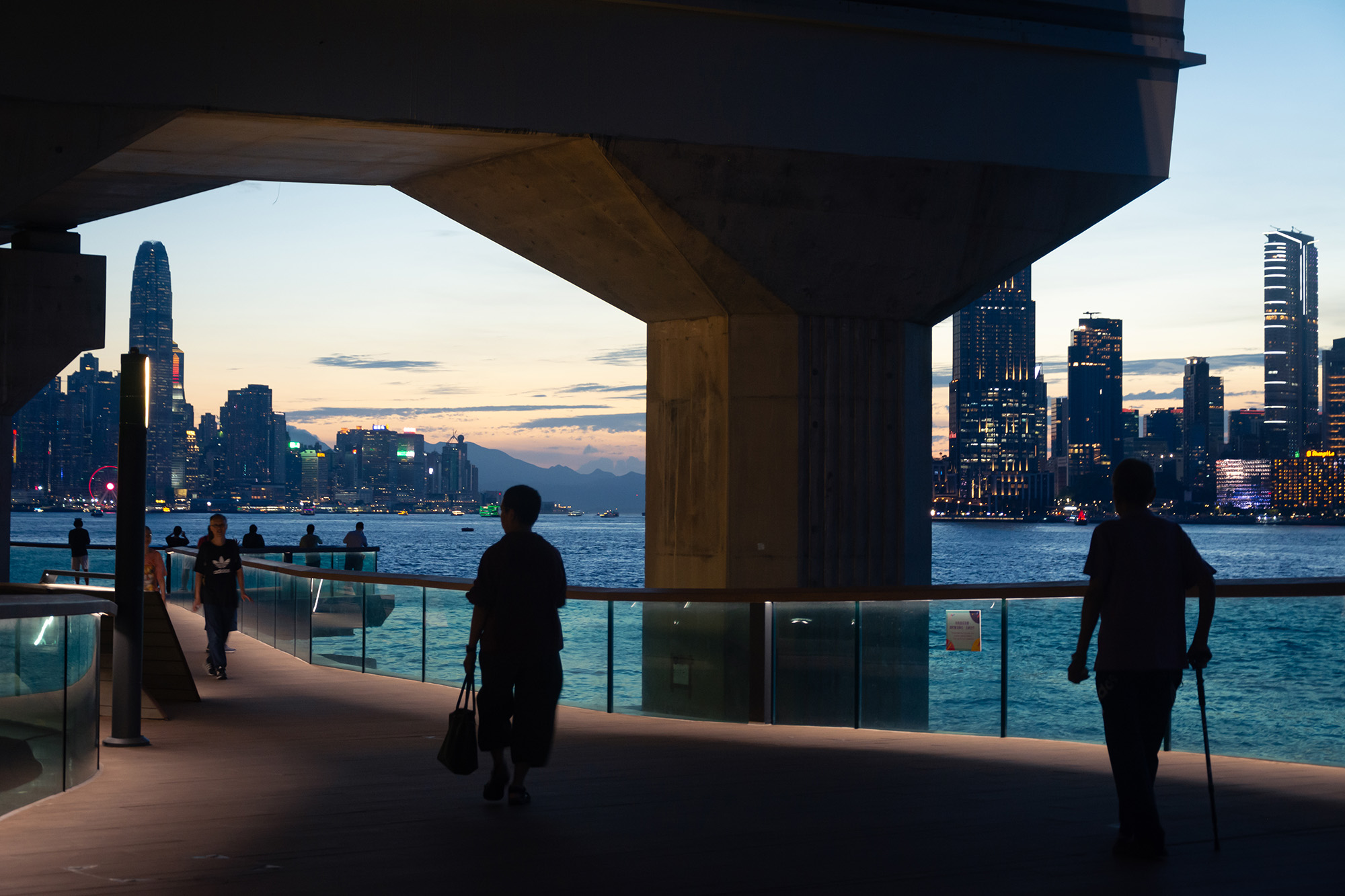
The new East Coast Boardwalk, opened in 2025, connects to the unconnected harbourfront in North Point.
The 2022 Policy Address responded to the initiative for the first time by proposing the construction of a 60-km “Round the Island Trail” on Hong Kong Island. The project is expected to complete 90% of the loop by the end of 2027; at the time of writing in mid-2025, the Civil Engineering and Development Department reported that 80% of the route had already been completed. The concept of “Harbourfront Shared Space” has also been applied to certain sections, with management principles described as “vision-driven,” “open management,” “fewer restrictions,” and “inclusiveness.” Meanwhile, facilities such as “Shared Path” and “Inclusive Park for Pets” have been gradually appearing along the route. It seems that the vision of connecting the harbourfront for everyone is gradually coming to fruition.
The Round the Island Trail project creates a continuous harbourfront space, but it may not be equally accessible to all users. In addition to pedestrians, these harbourfront spaces are also intended for cyclists, skateboarders, scooter riders, pet owners and their pets, and wheelchair users. However, when traveling along the completed sections, can everyone move about freely?
In 2022, the first “Shared Path” was established along the Central to Wan Chai Promenade, spanning one km in length and allowing bicycles and pedestrians to share the harbourfront promenade. The eastern and western sections of the East Coast Boardwalk, which opened in 2025, are also “shared paths” for bicycles and pedestrians, with a total length of 1.1 km. Hong Kong Island has historically lacked dedicated bicycle lanes. When the East Coast Boardwalk opened, it was touted for connecting the harbourfront along the island’s northern shore and being open to both pedestrians and cyclists. The North Point Ferry Pier even offers bike-sharing rentals, which is undoubtedly good news for cyclists on Hong Kong Island. Opting for shared paths rather than dedicated bicycle lanes also reduces the space required, making it seem like a win-win solution.
However, during my fieldwork, I observed that users on the East Coast Boardwalk occasionally jostled for space. Runners, who move at a faster pace, were frequently blocked by groups of walkers, though they were usually able to nimbly dodge the crowds. Cyclists, who travel even faster and have longer bikes, found it more difficult to maneuver around obstacles. Additionally, although pet owners generally follow the rules by keeping their dogs on leashes, the dogs are inevitably drawn to their surroundings and dart out unexpectedly. I have witnessed on more than one occasion runners and cyclists narrowly avoiding being tripped by dogs.
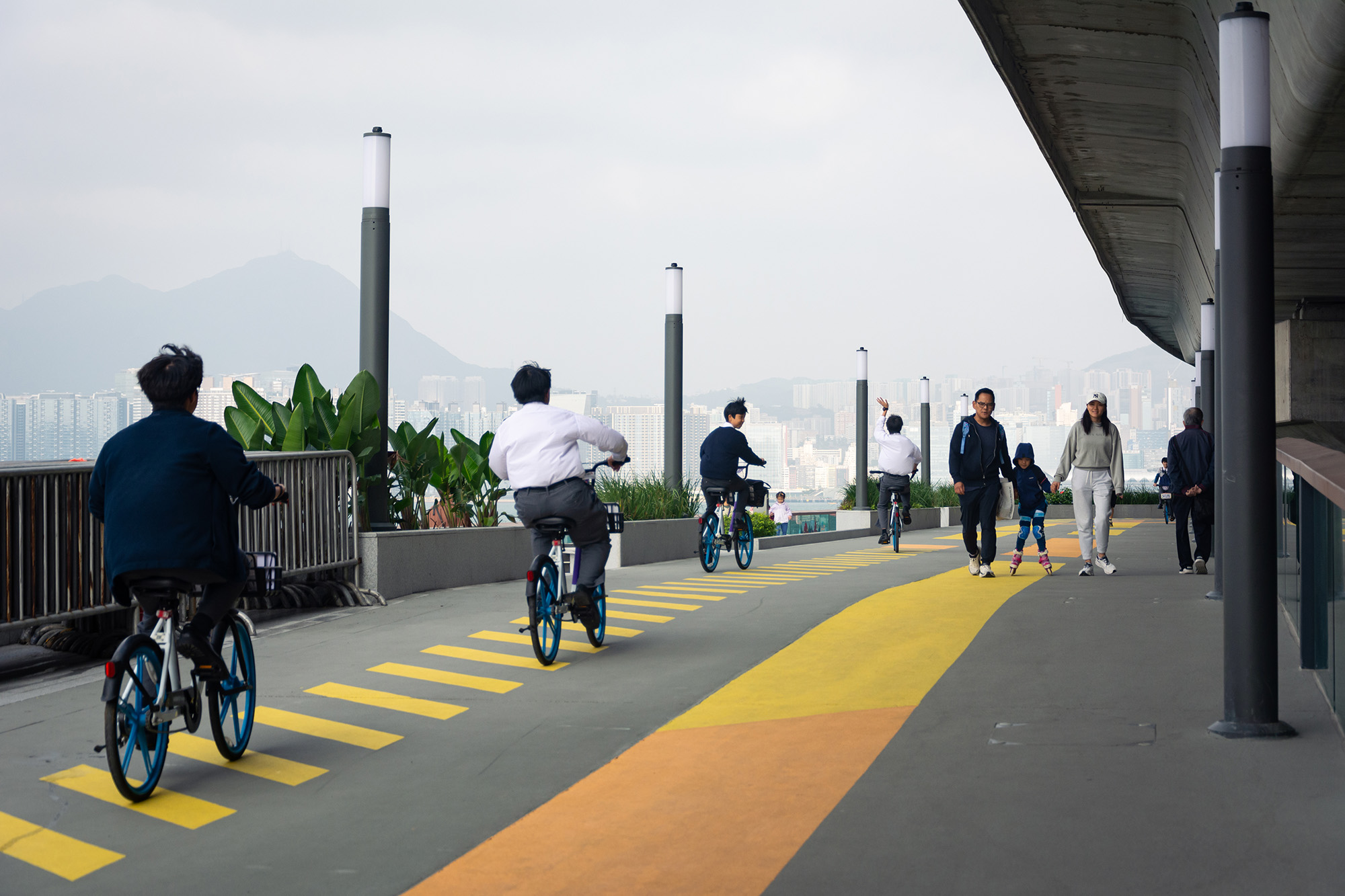
Cyclists, roller skaters, and pedestrians sharing the same path on the East Coast Boardwalk.
The boardwalk appears to be designed to channel foot traffic. The section closer to the sea is narrower, paved with wooden planks, and features more seating, making it ideal for strolling or pausing to enjoy the scenery. The section closer to the shore is wider, with a flat concrete surface, making it suitable for activities such as jogging, cycling, and walking dogs. Under this design, the wooden boardwalk section near the shore does not appear to have major issues, while conflicts over space seem to occur more frequently on the concrete path closer to the shore.
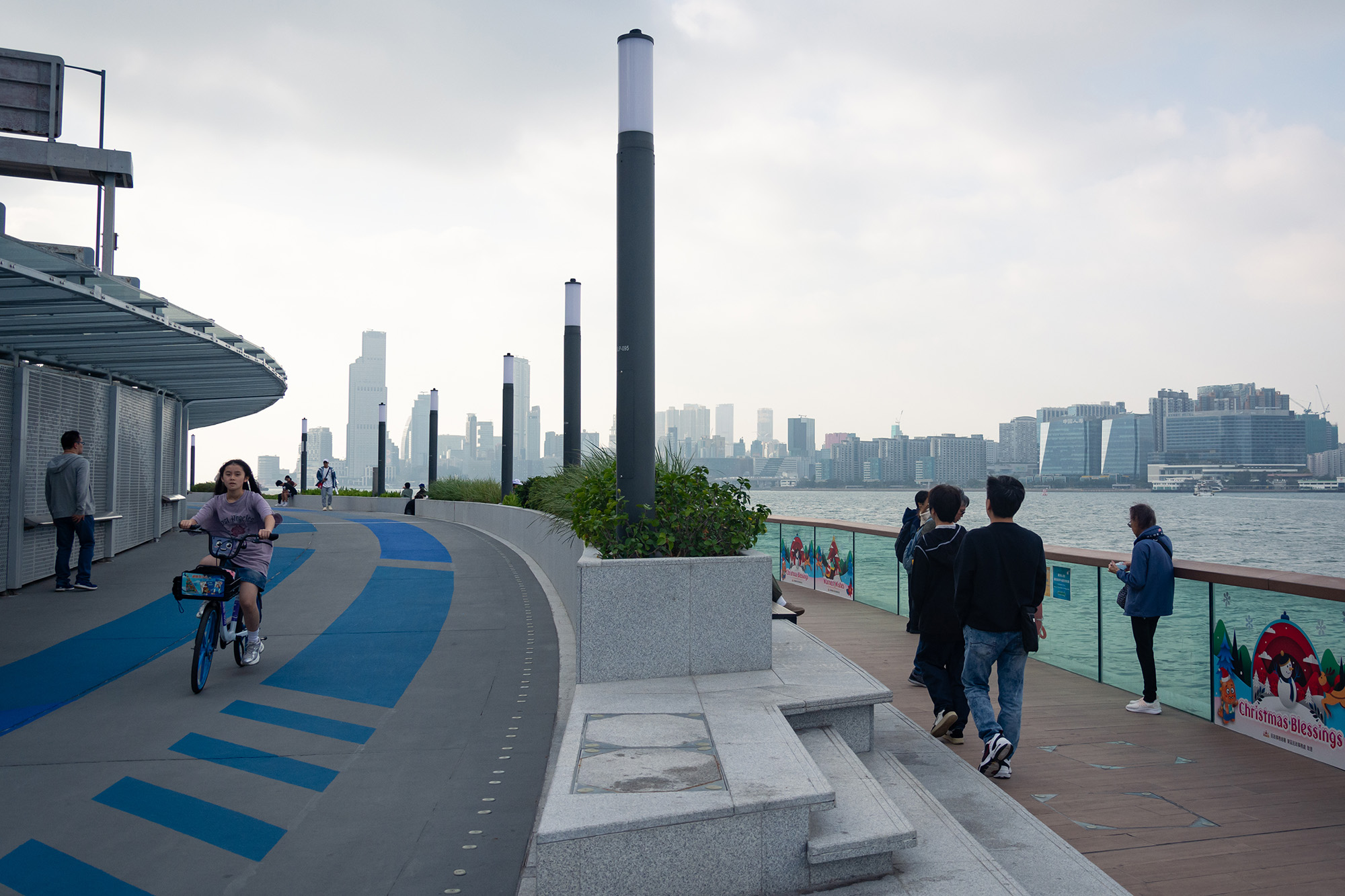
The concrete path near the shore and the wooden boardwalk near the water.
However, the real problem lies elsewhere. Since Phase 2 of East Coast Park has not yet been completed, the path west of the western section of the East Coast Boardwalk—which connects to the East Coast Park Precinct (Phase 1), where cycling is permitted—is a narrow “temporary pedestrian walkway.” Signs posted along the walkway prohibit bicycles, skateboards, and similar equipment, effectively cutting off the cycling route at this point. Nevertheless, during my field observations, I frequently encountered cyclists speeding through the narrow sidewalk in violation of the rules, forcing oncoming pedestrians to stop and dodge them, creating dangerous situations. However, from the cyclists’ perspective, since the path appears continuous, should they really have to sacrifice convenience and speed by dismounting and walking their bikes? Behind these violations, perhaps the users’ needs are also being highlighted.
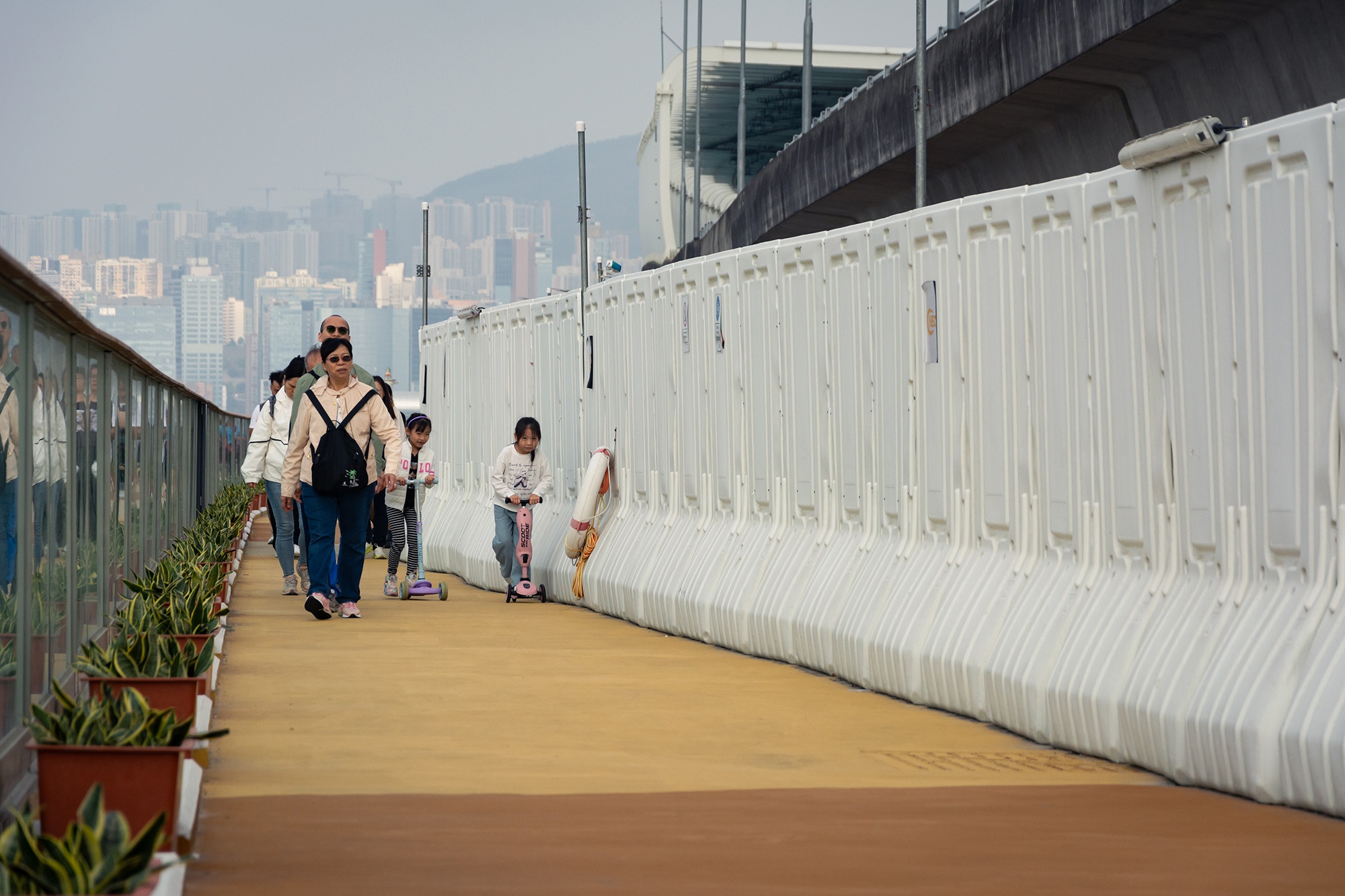
At its narrowest point, the “temporary pedestrian walkway” can barely accommodate three people walking side by side.
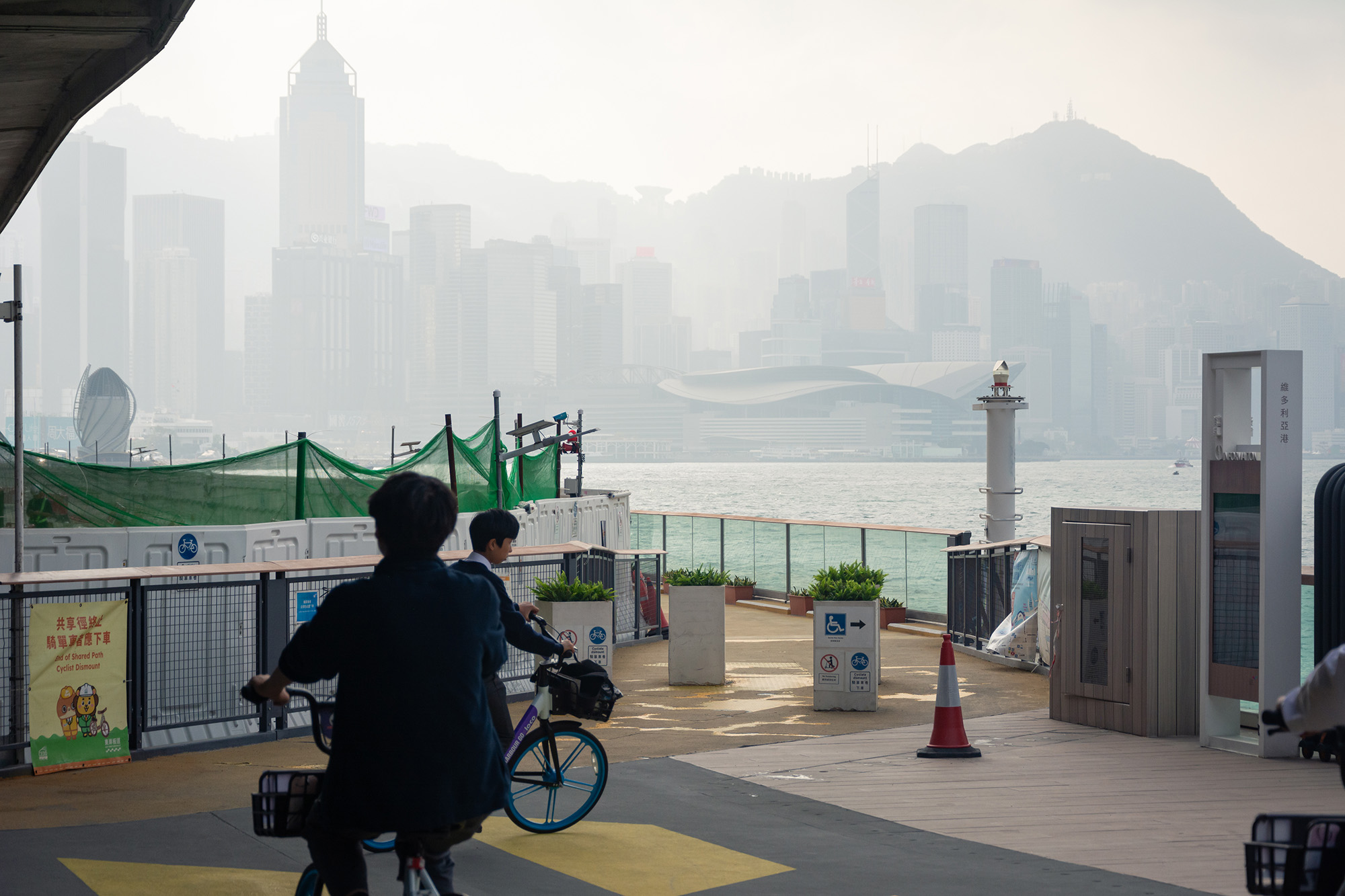
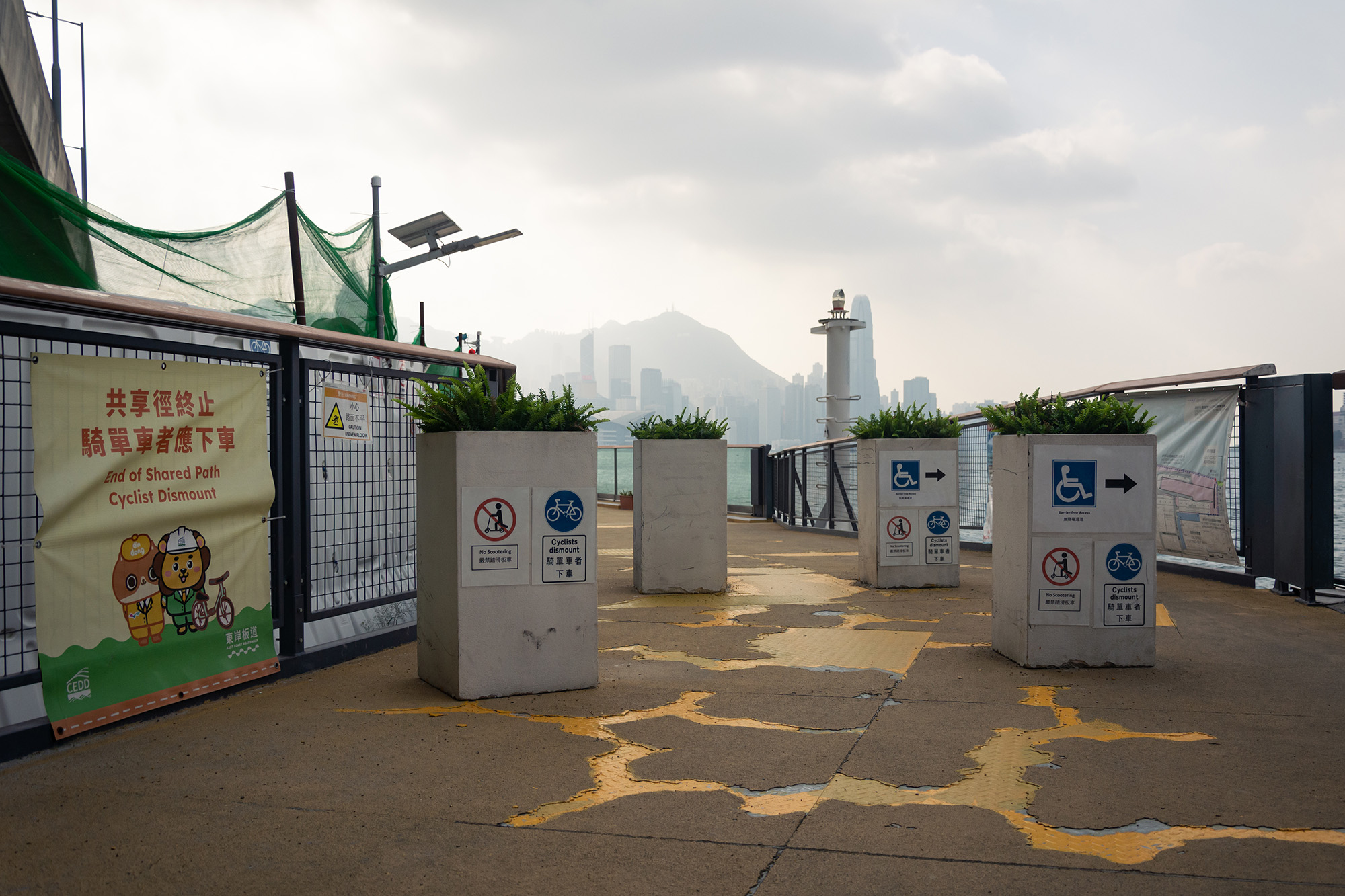
The section of the road open to bicycles ends just before the “temporary pedestrian walkway”; cyclists must dismount and walk or turn back.
On the Shared Path along the harbourfront from Central to Wan Chai Promenade, cyclists must remain within the marked boundaries and follow the rule of “cyclists on the left, pedestrians on the right,” in accordance with the Shared Path Cyclists’ Code. On the East Coast Boardwalk, cyclists should follow the bicycle stickers on the ground and avoid entering sections marked with pedestrian footprint stickers. To promote the shared use of the “Shared Path,” the East Coast Boardwalk Community Liaison Centre organized the “Shared Path Fun Day” in 2025. Through workshops, they introduced the “S.H.A.R.E. Harbourfront User Guide,” explaining precautions for fishing, cycling, and walking dogs along the East Coast Boardwalk. Clearly, harmonious coexistence on the same path does not happen naturally; it requires a multi-pronged approach involving the establishment of rules, monitoring, and education. Perhaps as more people begin to use the shared path frequently, regular users will eventually find a rhythm of mutual accommodation.
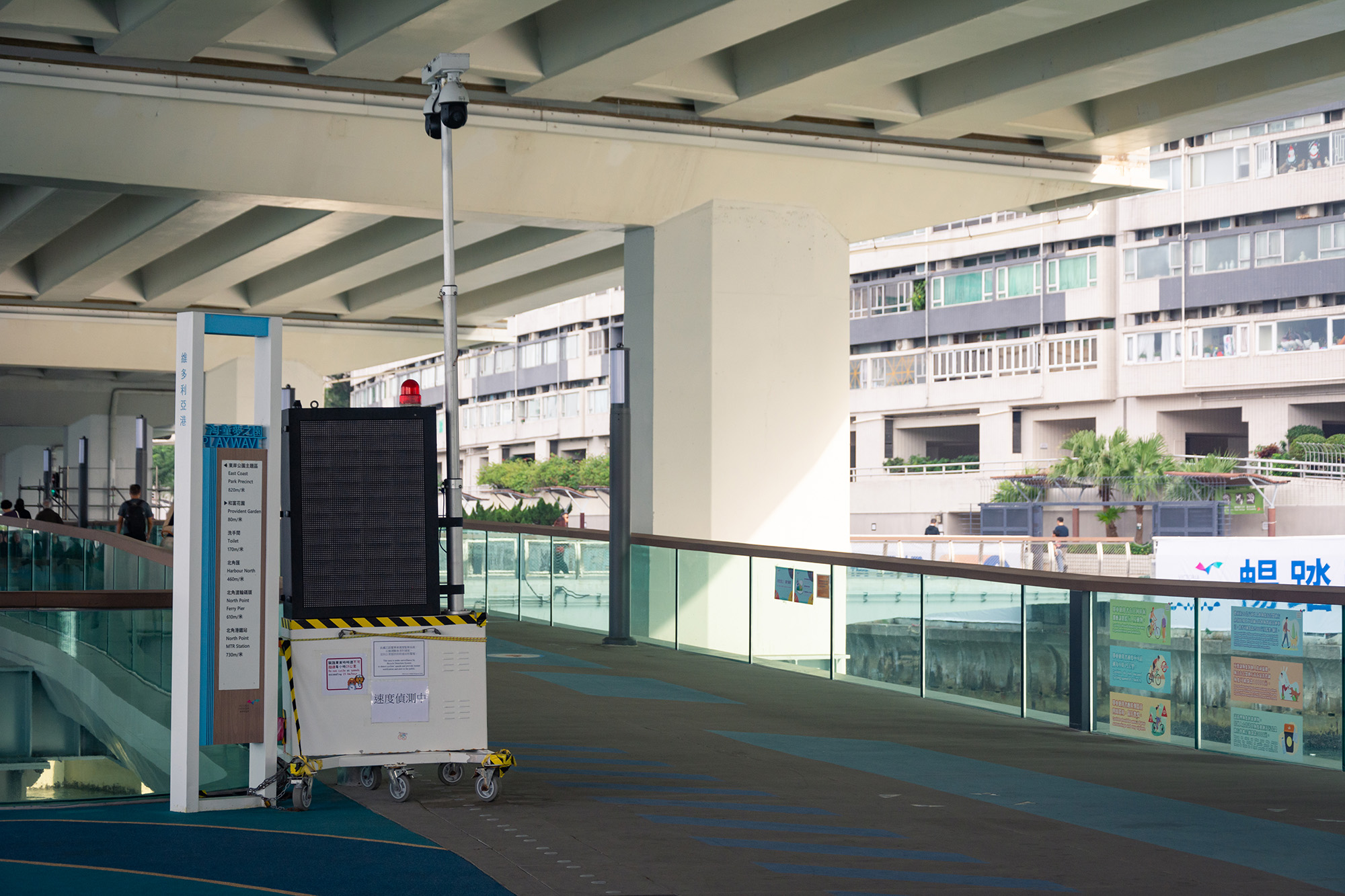
Along the East Coast Boardwalk Shared Path, there are signs indicating that cyclists must not exceed 15 km per hour, accompanied by speed detection devices.
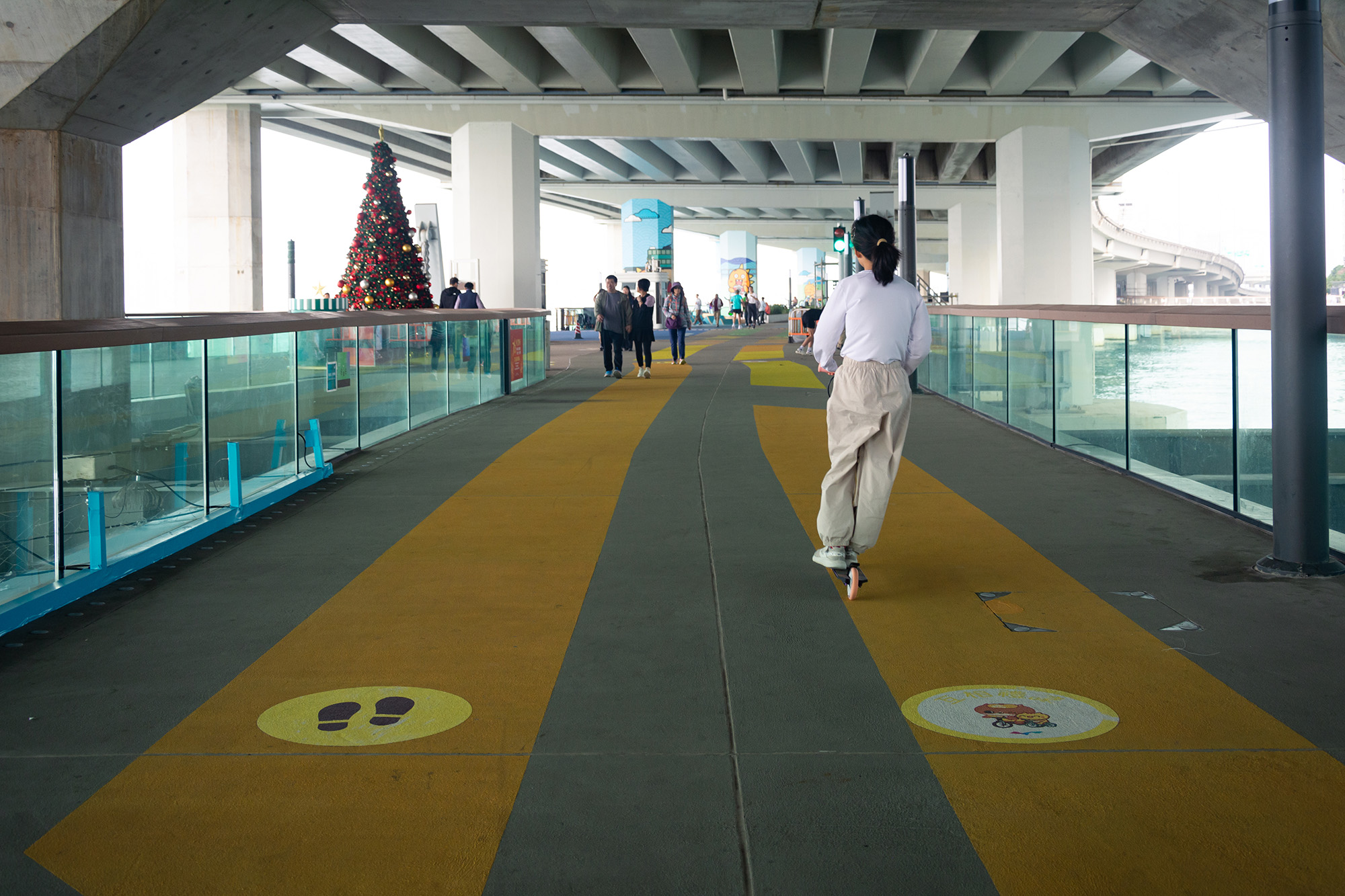
Pedestrian and bicycle stickers on the ground along the East Coast Boardwalk Shared Path.
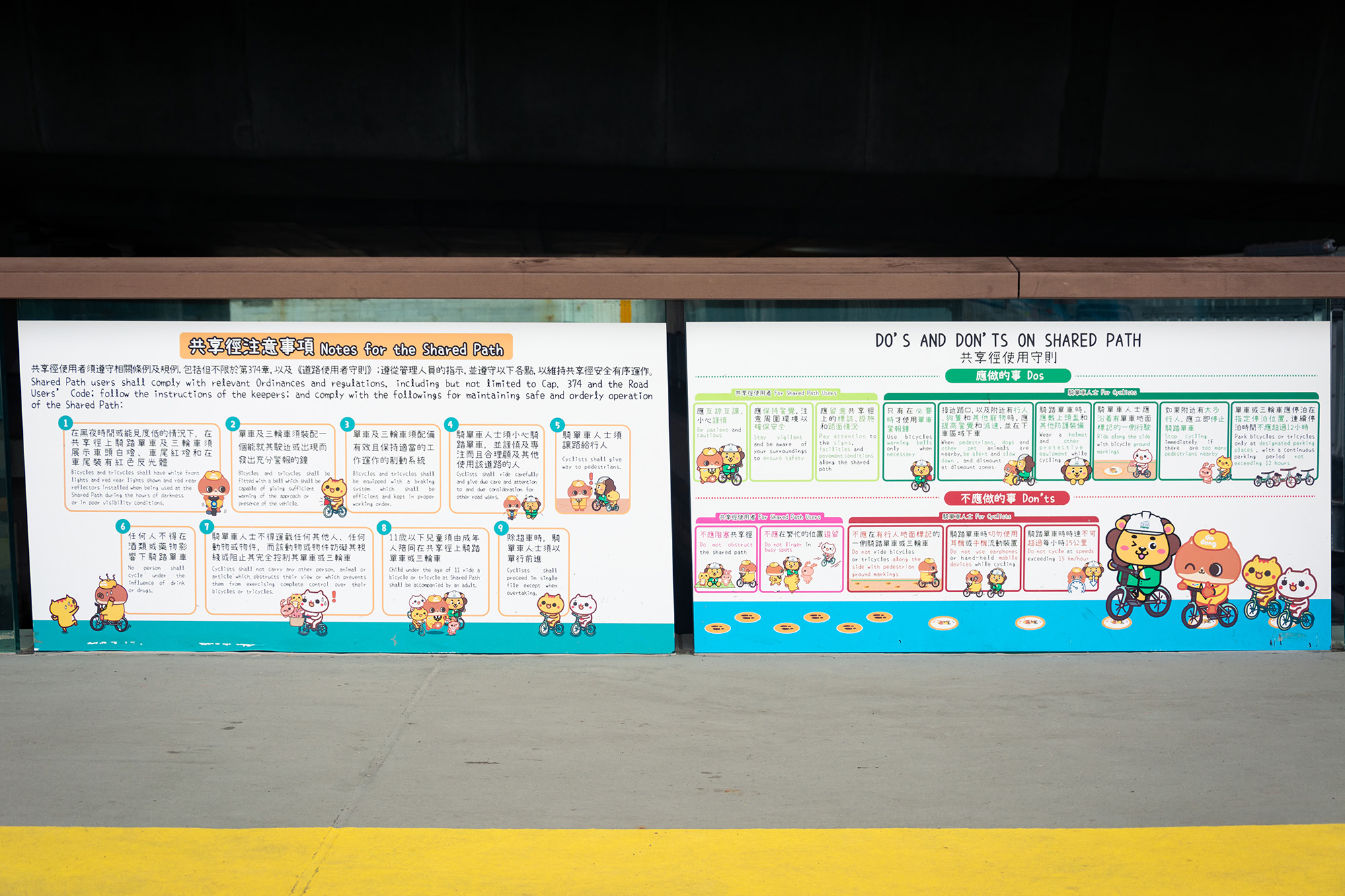
The code of conduct for the shared path are posted along the East Coast Boardwalk.
【 Subscribe to our newsletter to receive the latest articles by email. 】